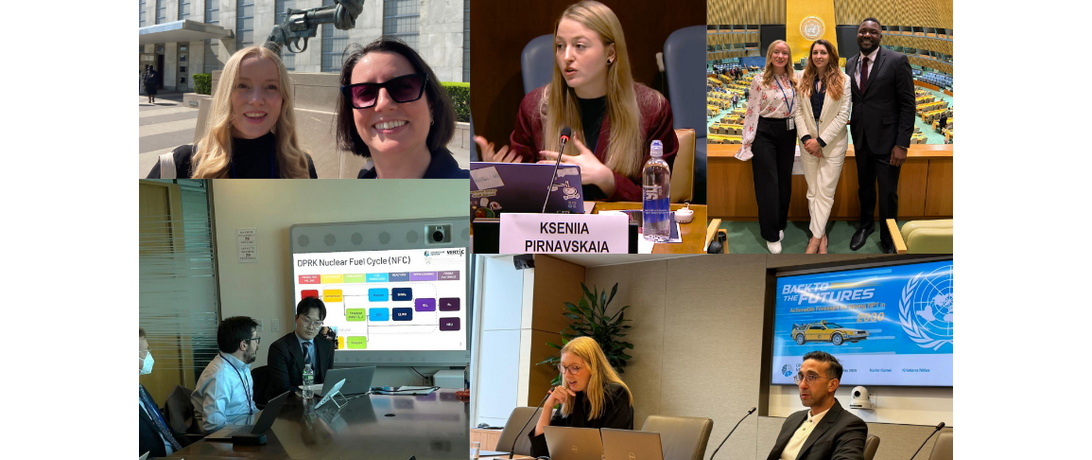
At the 2026 NPT Review Conference, Open Nuclear Network advanced evidence-based dialogue on nuclear risk reduction by both convening its own side events and contributing expertise to partner-led discussions on non-proliferation, disinformation, emerging technologies, arms control, and the future of the NPT.
Assessing North Korea's Developing Nuclear Programme
ONN Senior Analyst Sarah Laderman spoke at The Korea Society in conversation with Jonathan Corrado examining North Korea’s nuclear weapons programme, the evolution of its fuel cycle and the implications for monitoring, verification, and future arms control efforts. Drawing on ONN’s contributions to a multi-year consortium project with VERTIC, RUSI, and CNS, the discussion explored how open-source analysis can provide insight into one of the world’s most opaque nuclear programmes despite the absence of inspectors on the ground for nearly two decades. The event highlighted the increasingly important role of satellite imagery, modelling, forecasting and emerging analytical technologies in understanding the scale and trajectory of the DPRK’s nuclear development.
During the discussion, Sarah outlined how ONN and its partners approached the challenge of assessing North Korea’s nuclear capabilities through a “supply versus demand” framework: examining both the country’s ability to produce fissile material and its capacity to transform that material into deployable warheads. She presented examples of technical analysis conducted throughout the project, emphasising that while remote monitoring has significantly improved through advances in imagery and analytical techniques, major uncertainties remain, particularly regarding weaponisation infrastructure.
The conversation also addressed broader policy implications surrounding verification, arms control and the future trajectory of North Korea’s arsenal. Sarah explained that the most strategically important parts of the programme, especially warhead production and weaponisation, remain among the most difficult to monitor remotely, creating a fundamental challenge for any future negotiations or freeze agreements. She argued that realistic verification efforts would likely need to focus initially on more observable facilities such as reactors, reprocessing infrastructure and known enrichment sites. Throughout the event, Sarah underscored the importance of sustained, technically rigorous open-source analysis to support international understanding of the DPRK’s nuclear programme as it continues to expand in scale and sophistication.
A recording of the event is available on YouTube: https://www.youtube.com/live/XXAztJKLsus?si=SqAufL3MIwMovxZX
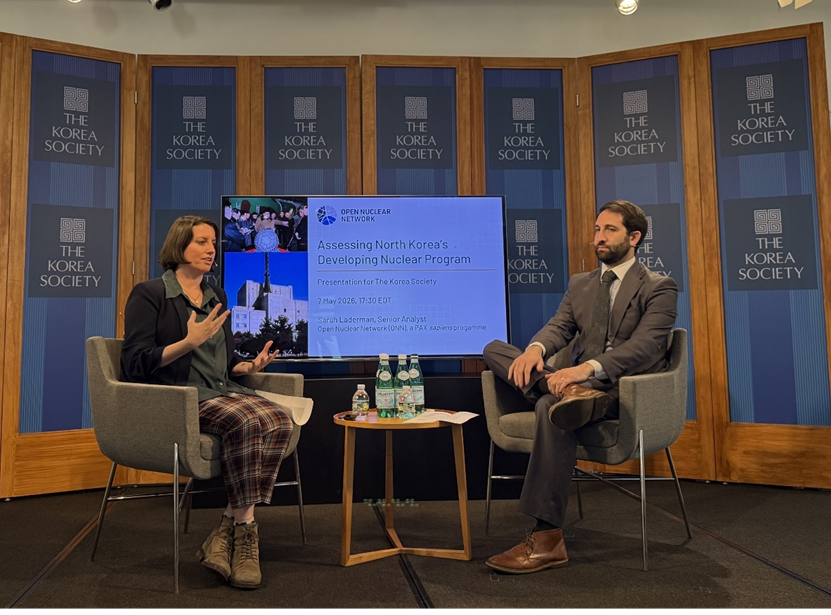
Photo credits: ONN
Radiological & Nuclear Disinformation: Implications for the NPT & Multilateral Nuclear Governance
ONN, as an implementing partner of the Global Partnership Initiative to Counter WMD Disinformation, convened a side event during the 2026 NPT Review Conference examining the implications of radiological and nuclear disinformation for multilateral nuclear governance. The discussion brought together experts from ONN and the Johns Hopkins Center for Health Security (JHCHS) to explore how disinformation narratives and manipulative tactics can affect negotiations, distort technical debates and complicate consensus-building within the NPT context.
The event opened with remarks from Daniel Barbarié of Global Affairs Canada, who highlighted why countering CBRN disinformation has become an increasing priority for Canada. He noted the growing impact that disinformation can have on international CBRN-related initiatives and cooperation efforts, underscoring the importance of strengthening resilience across multilateral settings.
Moderated by ONN Research Coordinator Elin Bergner , the discussion featured presentations from ONN Senior Analyst Sarah Laderman and Vanessa Grégoire of the Johns Hopkins Center for Health Security. Sarah examined how radiological and nuclear disinformation manifests within multilateral settings, outlining disinformation narratives that had emerged during the lead-up to the Review Conference, including allegations surrounding weapons development, institutional bias, nuclear testing and nuclear facility safety and security. She emphasised that many disinformation narratives rely not on entirely fabricated claims, but on selective framing, emotional manipulation and the strategic amplification of partial truths.
Vanessa Grégoire then explored the tactics underpinning CBRN disinformation campaigns, drawing on the initiative’s taxonomy of manipulative techniques observed across radiological, nuclear, biological and chemical contexts. Her presentation highlighted tactics such as appeals to emotion, misuse of scientific and technical information, discrediting institutions and inspection mechanisms and “flooding the zone” with repetitive allegations, while also examining how prebunking and inoculation approaches can help build resilience against manipulative narratives.
As part of the discussion, Elin Bergner also presented, on behalf of King’s College London, the initiative’s CBRN Disinformation Tracker. The tool is designed to help users track how disinformation narratives evolve across multilateral disarmament settings over time by bringing together allegations, official statements, denials, and related material within a structured chronological framework. The presentation highlighted how the tracker can support situational awareness, help identify recurring patterns and tactics, and provide delegations with greater contextual understanding when navigating contested information environments during negotiations.
The event highlighted the importance of preparedness, situational awareness, and coordination in navigating increasingly contested information environments within multilateral forums.
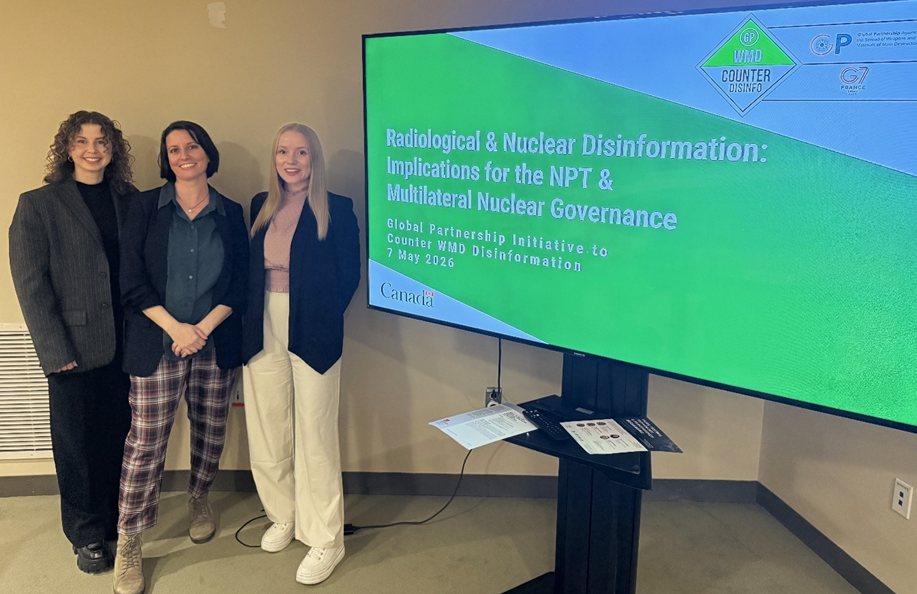
Photo credits: ONN
Open Source Assessments of the DPRK's Nuclear Programme
ONN, in partnership with United Nations Office for Disarmament Affairs (UNODA), convened an expert discussion at United Nations Headquarters presenting key findings from a multi-year project examining the DPRK’s nuclear fuel cycle and weaponisation capabilities. The event brought together Christopher King of UNODA, ONN Senior Analyst Jaewoo Shin, Grant Christopher of VERTIC, and Jeffrey Lewis of CNS to discuss how innovative open-source methodologies can support a detailed and independent assessment of North Korea’s nuclear programme. The session explored the implications of these findings for monitoring and verification, their relevance for potential future negotiations, and the broader value of open-source analysis for strengthening non-proliferation efforts in an evolving global security environment.
Christopher King opened the discussion by situating the DPRK nuclear issue within the broader context of the Treaty on the Non-Proliferation of Nuclear Weapons and international efforts to uphold the non-proliferation regime. He highlighted the importance of sustained, technically rigorous research on North Korea’s nuclear programme, and reflected on the value of open-source work from the perspective of UNODA. Grant Christopher then provided an overview of the project and its core technical findings, outlining the consortium’s assessment of fissile material production and estimated warhead numbers. His presentation echoed the project’s broader “supply versus demand” approach, examining both North Korea’s capacity to produce nuclear material and its ability to convert that material into deliverable nuclear weapons.
Jaewoo Shin discussed the implications of the project’s findings for monitoring and verification priorities, with particular attention to what these assessments may mean for any future negotiations with the DPRK. He underscored that while some elements of the nuclear fuel cycle, such as reactors, reprocessing infrastructure and known enrichment-related sites, are comparatively more observable and therefore more amenable to monitoring and verification, the weaponisation side of the programme presents a much more difficult challenge. Production facilities, warhead stockpiles, storage sites and related infrastructure are harder to identify and assess remotely, making them not only more difficult to understand, but also harder to constrain, and harder still to verify that any agreed constraints are being upheld. Jeffrey Lewis concluded with case studies demonstrating how creative open-source techniques, tools and analytical approaches can generate insight into opaque nuclear programmes. Together, the presentations highlighted both the growing sophistication of open-source analysis and its limits, emphasizing the need for continued methodological innovation to support verification, arms control and non-proliferation policy.
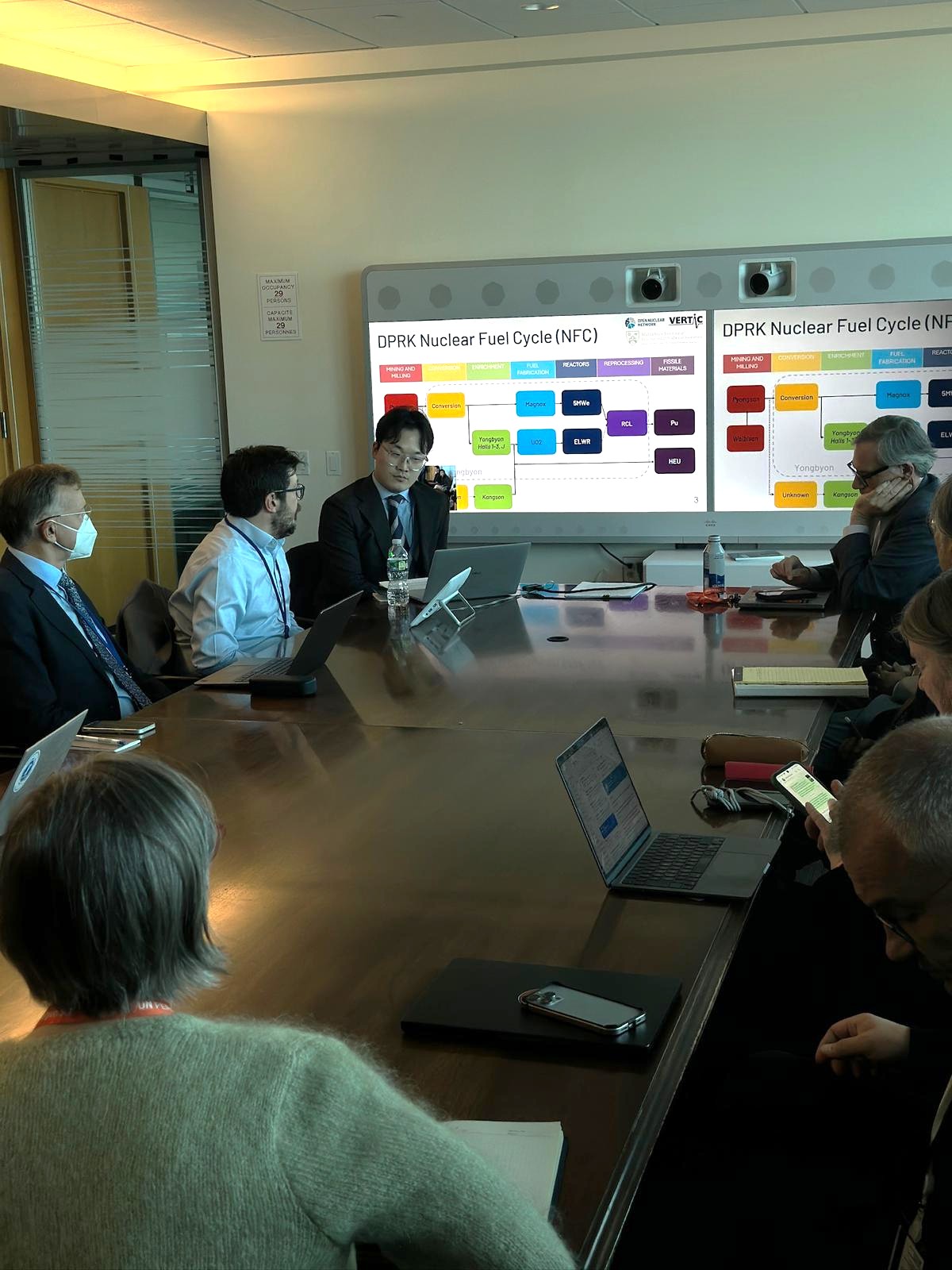
Photo credits: ONN
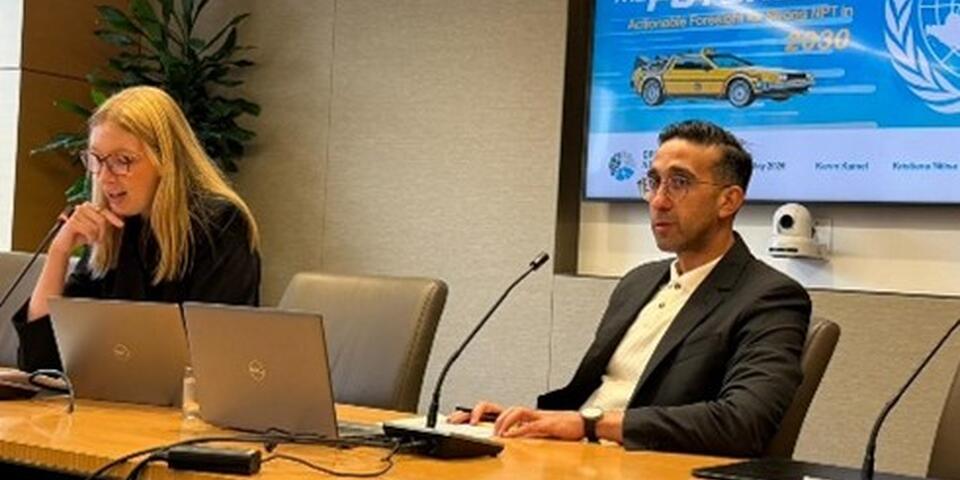

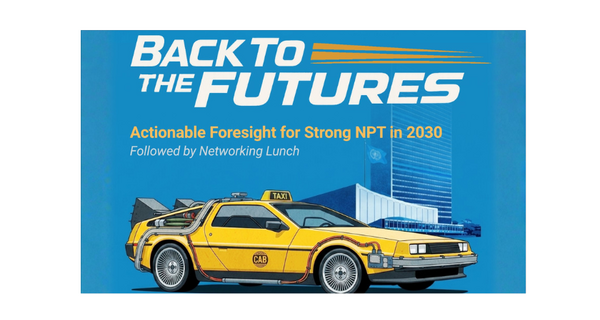
Building on these forecasts, participants were then asked to imagine what a successful NPT regime would look like in 2030. Responses highlighted stronger safeguards, effective support for the peaceful uses of nuclear technology, engagement with emerging technologies such as artificial intelligence and advanced reactors, progress on disarmament commitments, and broader international participation in nuclear governance discussions.
Participants then ranked a series of future scenarios generated from their collective inputs. The most plausible future centred on a stronger and better-resourced International Atomic Energy Agency (IAEA), capable of supporting safeguards, nuclear safety, peaceful uses and emerging technologies. Participants identified increased funding, stronger partnerships, and greater engagement with the private sector and technology communities as important steps towards achieving this outcome.
A recurring theme throughout the discussion was the importance of building connections between the nuclear policy community and adjacent fields. Participants highlighted opportunities for collaboration with experts working on artificial intelligence, humanitarian issues, peacebuilding and governance, arguing that such partnerships could bring new ideas, expertise and resources into nuclear risk reduction and non-proliferation efforts.
While participants differed in their expectations about the future of the NPT, the discussion highlighted a shared interest in identifying realistic pathways for strengthening the regime. From safeguarding against proliferation risks to preparing for the governance challenges posed by emerging technologies, the exercise demonstrated the value of looking beyond immediate diplomatic debates and considering what practical steps can be taken today to support a more resilient non-proliferation regime by 2030.
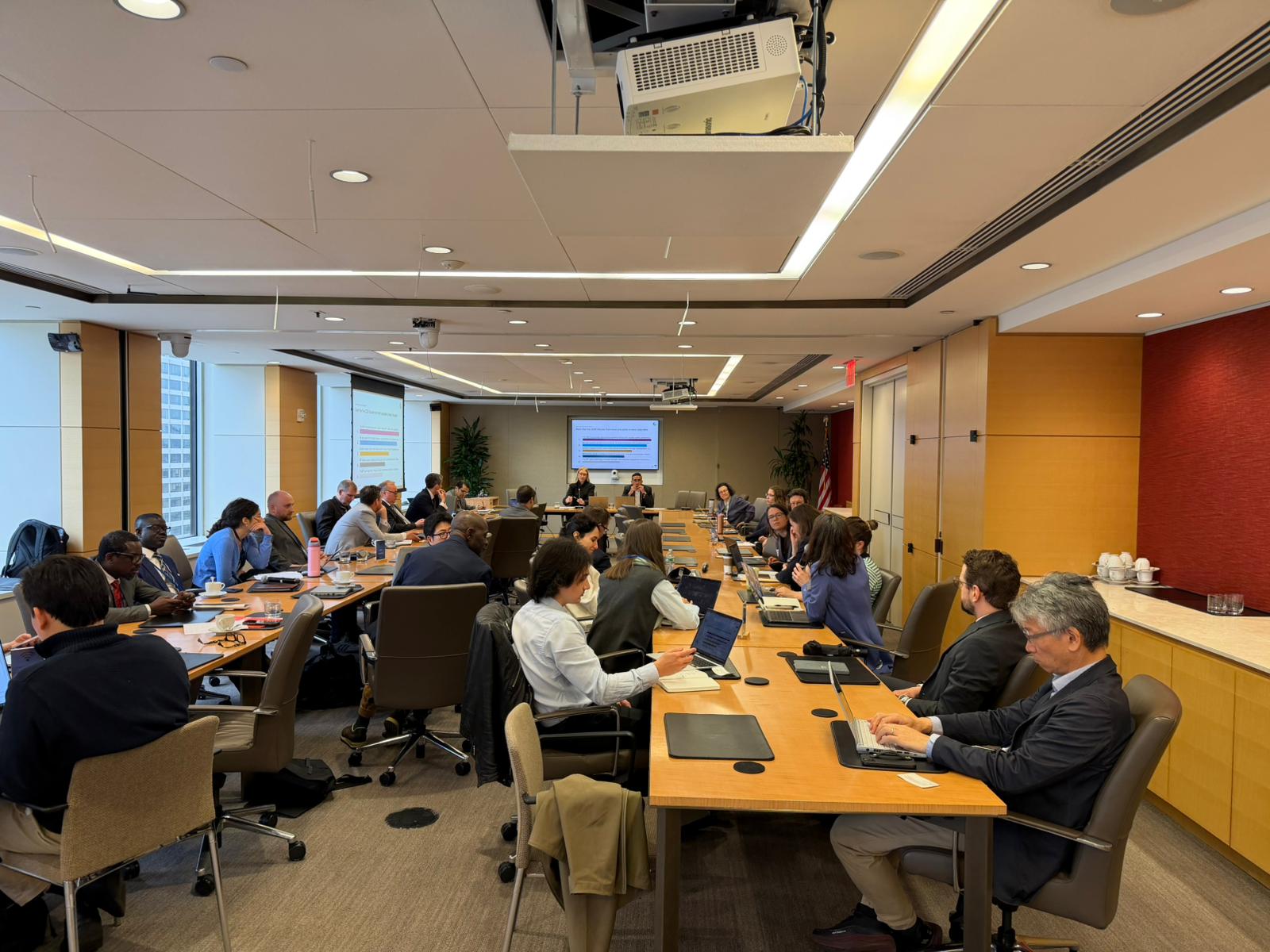
Photo credits: ONN
International Group of Eminent Persons (IGEP) Side Event hosted by the Ministry of Foreign Affairs of Japan
ONN Network and Engagement Specialist Dr Olamide Samuel participated in Japan’s side event on the International Group of Eminent Persons for a World without Nuclear Weapons during the opening day of the 2026 NPT Review Conference.
Hosted by the Permanent Mission of Japan to the United Nations on 27 April, the event presented IGEP’s recommendations for the Review Conference and brought together senior diplomats, international officials, experts, and government representatives. Japan’s event page notes that the discussion was centred on the IGEP recommendations and their relevance to the 2026 NPT Review Conference.
Opening the event, Dr KunimitsuAyano, State Minister for Foreign Affairs of Japan, stressed that dialogue and joint initiatives involving both nuclear-weapon and non-nuclear-weapon states are indispensable at a time of deepening division and confrontation
The event also featured remarks by Ambassador Do Hung Viet, President of the 2026 NPT Review Conference and Permanent Representative of Viet Nam to the United Nations, and Izumi Nakamitsu, UN Under-Secretary-General and High Representative for Disarmament Affairs.
The panel discussion brought together IGEP members and invited experts, including Ambassador Gustavo Zlauvinen, Dr George Perkovich, Dr Nobumasa Akiyama, Gaukhar Mukhatzhanova and Dr Olamide Samuel.
ONN’s intervention focused on a central phrase in the NPT: good faith.
Dr Samuel argued that Article VI good faith should not be treated as diplomatic courtesy or familiar treaty language. It has operational content: serious negotiation toward effective measures, no use of dialogue as delay while strategic competition accelerates, and preservation of the conditions that make negotiation meaningful.
Those conditions include communication, transparency, verifiability, and conduct that does not hollow out legal commitments before new ones can be attempted.
Across the event, speakers returned to a shared concern: the NPT cannot be sustained by declarations alone. It requires practical action, renewed dialogue, and trust between nuclear-weapon and non-nuclear-weapon states.
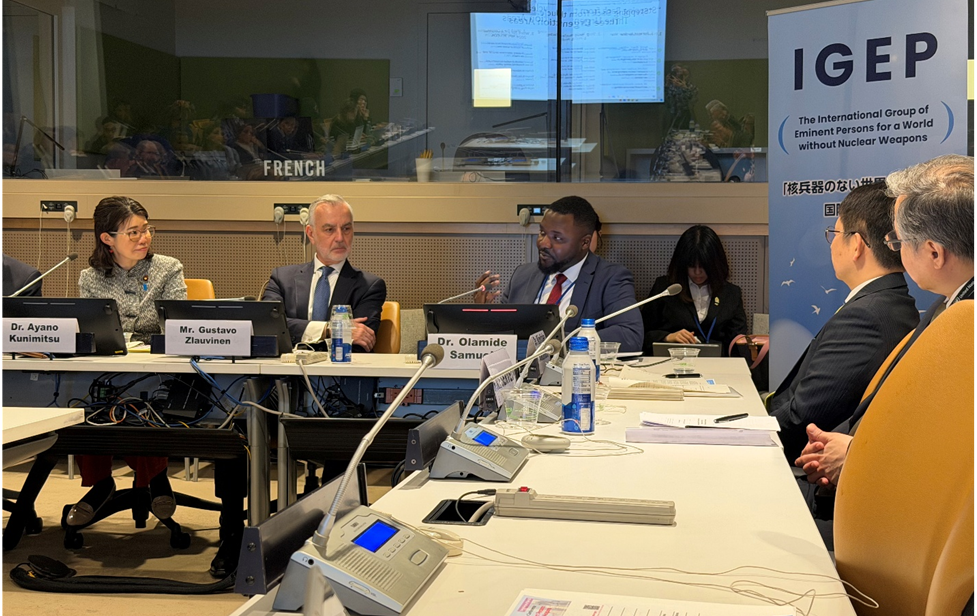
Photo credits: ONN
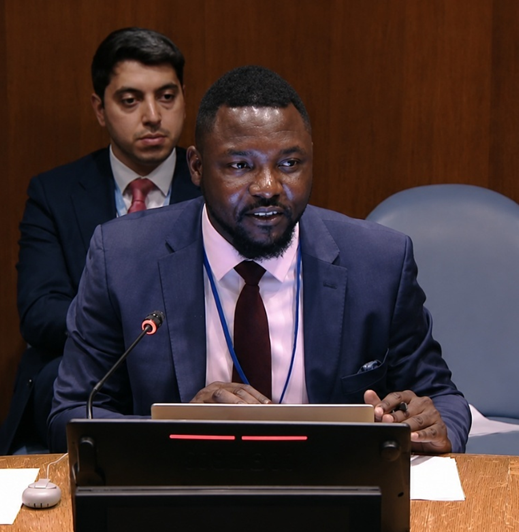
Photo credits: UN
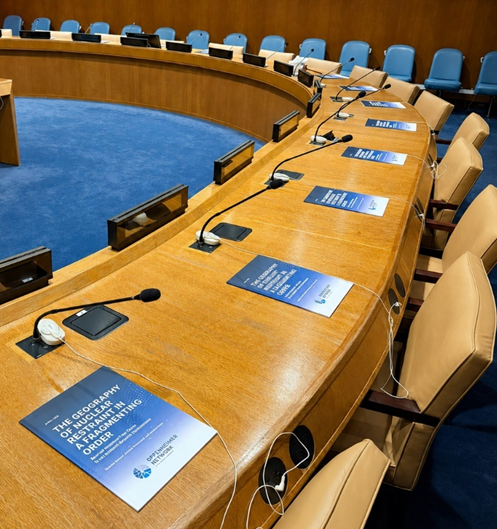
Photo credits: ONN
RECNA's Side Event: From the International Nuclear Non-Proliferation Regime to the Global Zero Regime
ONN Network and Engagement Specialist Kseniia Pirnavskaia spoke at RECNA’s side event, “From the International Nuclear Non-Proliferation Regime to the Global Zero Regime,” where she presented findings from the co-authored paper with ONN Director Andreas Persbo, “What Should the International Non-Proliferation Regime Look Like Today and Over the Next 10 to 20 Years?” The panel also featured ONN Advisory Council Member Michiru Nishida, who discussed his article, “Transitioning from the Nuclear Non-Proliferation Regime to a Future Global Nuclear-Zero Regime: What Legal and Institutional Issues Will the TPNW Need to Address Going Forward?” Together, the contributions explored how the non-proliferation regime can respond to today's geopolitical realities while preparing for a potential future nuclear-zero framework. It was an honour for ONN to share the stage and exchange perspectives, and special thanks go to Kazuko Hikawa, RECNA’s Vice Director, for the invitation to speak and contribute to the special issue of the Journal for Peace and Nuclear Disarmament.
Read the paper: https://www.tandfonline.com/doi/full/10.1080/25751654.2026.2641250
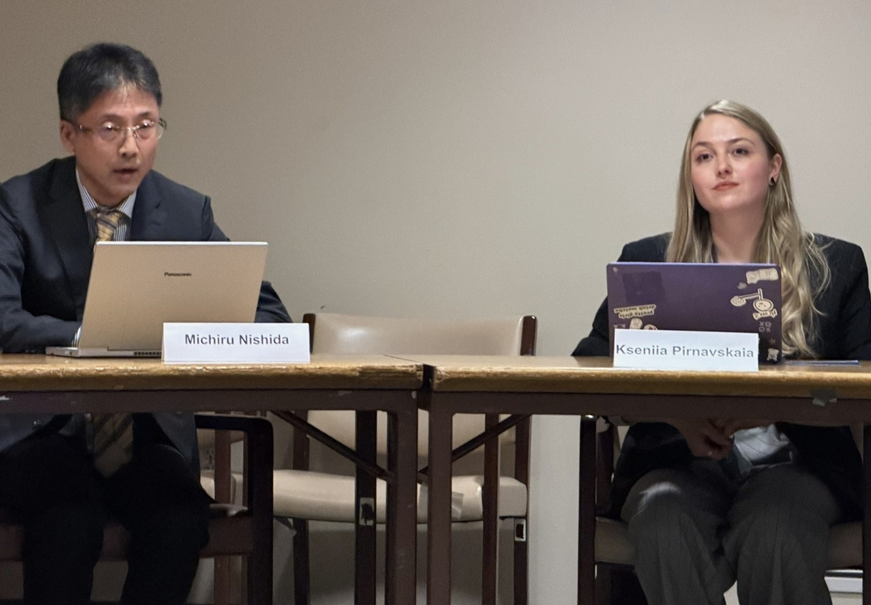
Photo credits: ONN
UNODA & Republic of Korea's side event: Future-Proofing the NPT: A Youth-led Intergenerational Dialogue on Nuclear Weapons and Emerging Technologies
ONN Network and Engagement Specialist Kseniia Pirnavskaia moderated the side event “Future-Proofing the NPT: A Youth-led Intergenerational Dialogue on Nuclear Weapons and Emerging Technologies,” co-organised by the United Nations Office for Disarmament Affairs (UNODA), Youth4Disarmament and the Republic of Korea. In setting the scene for the discussion, she presented a future-oriented scenario in which AI, cyber, space, and other dual-use technologies reshape the security environment faster than governance can adapt, while younger generations and Global Majority voices remain underrepresented in NPT processes, risking a gradual erosion of the Treaty’s relevance and legitimacy.
The discussion was opened by Adedeji Ebo, Deputy to the UN High Representative for Disarmament Affairs, and Baek Yoon Jeong, Deputy Director-General for International Security at the Republic of Korea's Ministry of Foreign Affairs and brought together senior experts from SIPRI and the James Martin Center for Nonproliferation Studies and member states including Finland, Mexico and the Republic of Korea.
Participants explored how to future-proof the NPT in an era of rapid technological change, emphasising the need to preserve meaningful human control over nuclear decision-making, establish mechanisms that allow governance to keep pace with emerging technologies, strengthen links between technology and arms control forums, expand meaningful youth and Global Majority participation and develop new transparency and confidence-building measures for AI, cyber and other emerging technologies. The dialogue also highlighted recommendations on emerging technologies and nuclear policy previously presented at the UN General Assembly First Committee.
Watch the recording: https://webtv.un.org/en/asset/k14/k14p99kdot
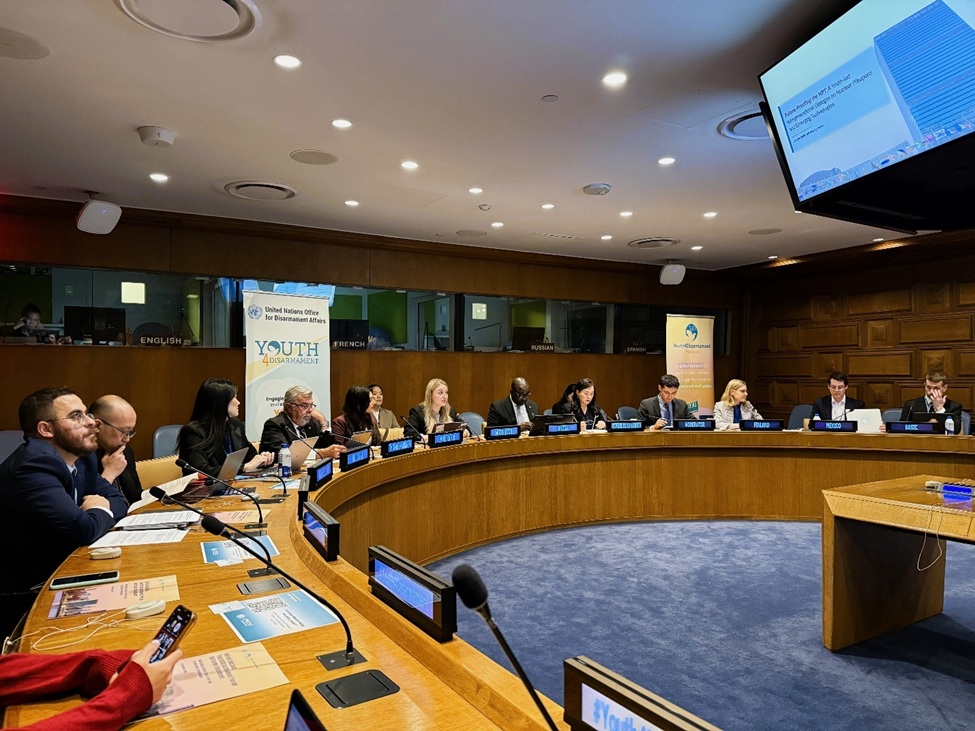
Photo credits: UNODA/Youth4Disarmament
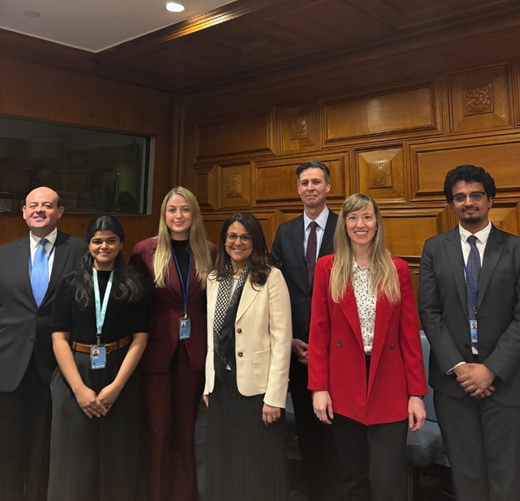
Photo credits: UNIDIR
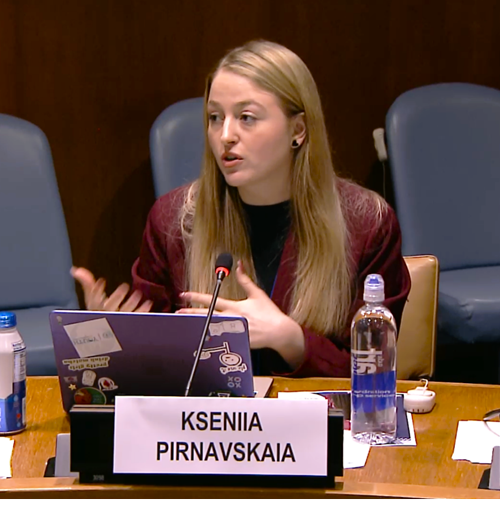
Photo credits: UNIDIR
SIPRI & Germany's Side event: Exploring Opportunities at the AI-Nuclear Nexus
ONN Senior Analyst Sarah Laderman was a panellist at the SIPRI-GFFO hosted side event "Exploring Opportunities at the AI-Nuclear Nexus". Featuring experts from government, academia and civil society, including ONN Advisory Council Member Tong Zhao, the discussion explored how AI is reshaping arms control, non-proliferation and crisis stability. Reflecting growing international attention to the issue, including Germany’s prioritisation of the AI-nuclear nexus during this Review Conference, panellists discussed the promise of AI-enabled verification and in an increasingly automated information environment. Discussions highlighted the importance of maintaining human judgment in nuclear decision-making, with participants emphasizing that while AI can identify patterns and anomalies, it still lacks the contextual understanding necessary to explain intent or strategic motivations.
Drawing on ONN’s recent work using AI-enabled satellite imagery analysis for DPRK monitoring, Sarah highlighted how AI can strengthen arms control and non-proliferation efforts by helping analysts process vast amounts of open-source data more efficiently and identify broader patterns of nuclear-related activity. She emphasised that AI is most valuable as a tool to augment, not replace, expert analysis, enabling analysts to focus on interpretation and judgment rather than repetitive manual tasks. Her remarks also underscored the need for responsible integration of AI into existing verification regimes, including through collaboration between international organisations, member states, private industry and civil society.
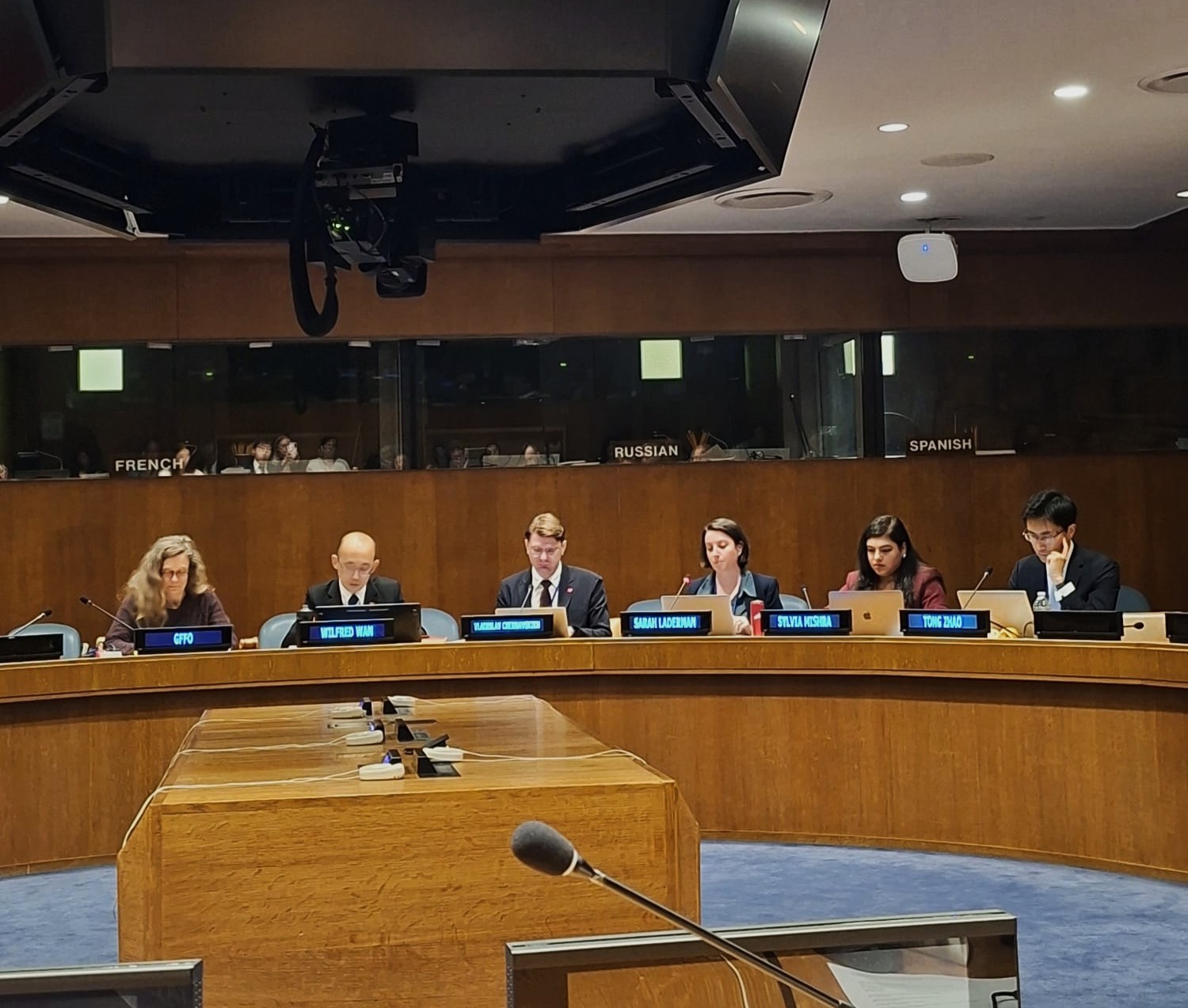
Photo credits: ONN
ONN NGO Statement
ONN Research Coordinator Elin Bergner delivered a statement on behalf of the Global Partnership Countering WMD Disinformation Initiative during the 2026 NPT Review Conference, addressing the growing impact of radiological and nuclear disinformation on multilateral diplomacy. The intervention highlighted how false, misleading, or unverified allegations relating to safeguards, compliance, nuclear intent, safety and security can distort discussions, shape diplomatic positions before technical clarification is available and increase pressure on delegations navigating technically complex issues.
The statement emphasised that radiological and nuclear issues rely on specialised verification methodologies, established evidentiary standards and clearly defined institutional mandates. When technical findings are selectively framed, simplified, or removed from context, there is an increased risk of misunderstanding, polarisation and erosion of trust within multilateral settings. Particular attention was given to the challenges faced by delegations with limited technical capacity, which may be placed under pressure to react to serious allegations before sufficient clarification or verification has taken place.
Addressing all three pillars of the Treaty, the statement noted that disinformation can undermine confidence in verification processes, complicate disarmament dialogue and weaken confidence in the peaceful uses of nuclear technology. It called for allegations to be grounded in verified information, for technical assessments to be referenced in full context and for established clarification mechanisms to be used where uncertainties arise.
The statement concluded by stressing that efforts to strengthen information integrity are intended not to constrain debate, but to support informed engagement, reduce avoidable polarisation and preserve the integrity of multilateral deliberations within the NPT framework.
Watch the recording: https://webtv.un.org/en/asset/k1j/k1j1ujhf1cWeb TV
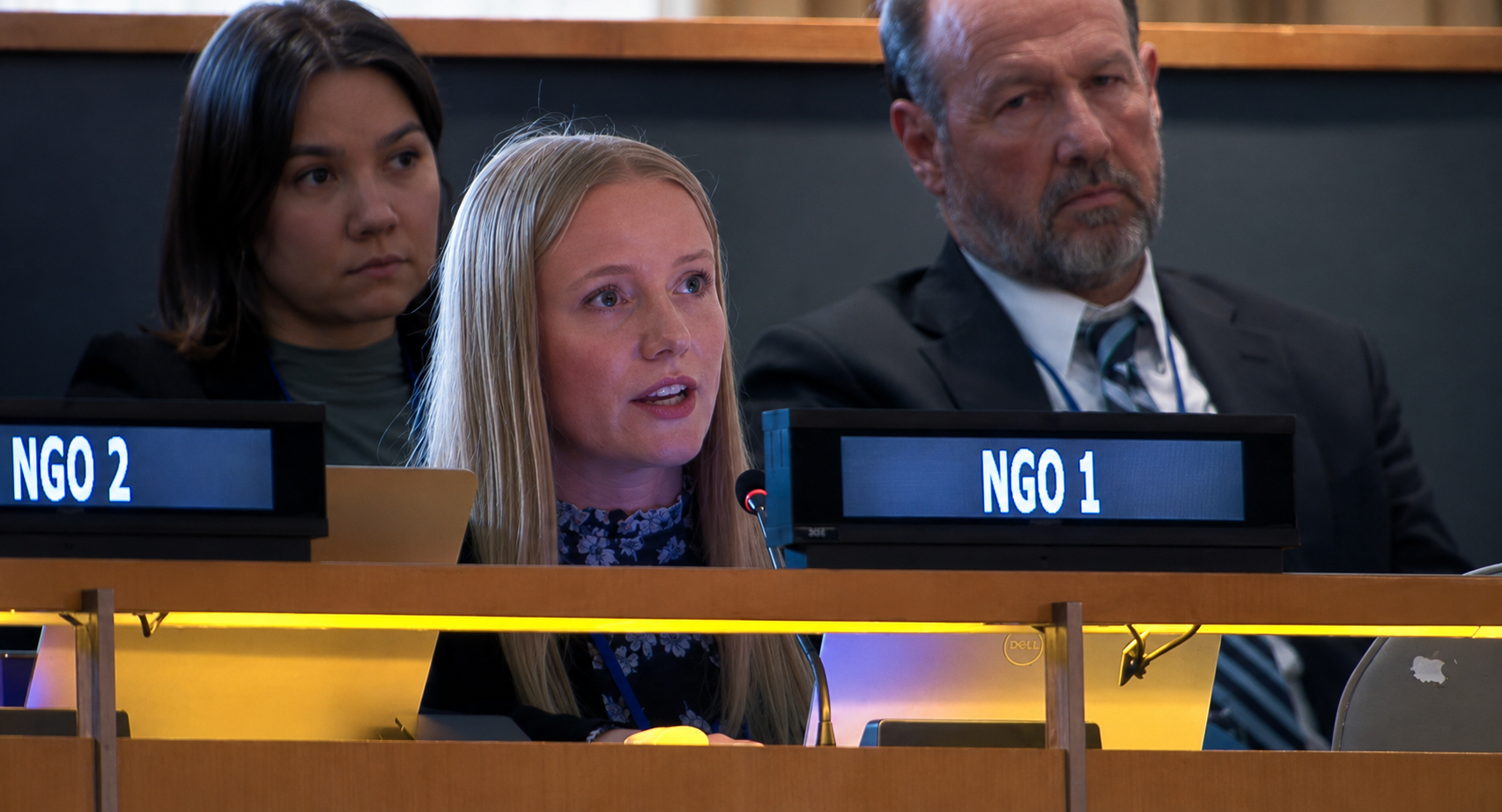
Photo credits: UN