How unusual is the Democratic People’s Republic of Korea’s nuclear weapons programme, and what can the experiences of other nuclear-armed states tell us about its capabilities and possible future trajectory?
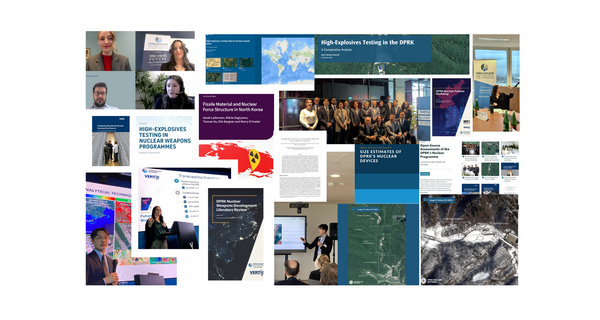
This new Open Nuclear Network report, prepared on behalf of VERTIC for the Open-Source Assessments project, compares the DPRK’s programme with those of nine historical and contemporary known or alleged nuclear-armed states: China, France, India, Israel, Pakistan, South Africa, the Soviet Union/Russia, the United Kingdom and the United States.
Drawing exclusively on open sources, the report examines four dimensions that define a nuclear weapons programme: nuclear strategy and doctrine; fissile material production; nuclear testing and warhead design; and arsenal size and types of delivery systems. It identifies where historical parallels can clarify the DPRK’s development, and where comparisons risk misleading analysts and policymakers.
Key Findings
- No single nuclear programme provides a direct analogue for the DPRK. Its distinctiveness lies in its combination of acute conventional vulnerability, regional and intercontinental targeting requirements, limited fissile material, public nuclear signalling and a doctrine encompassing battlefield and potentially pre-emptive nuclear use.
- Pakistan and the early Soviet programme offer the closest doctrinal parallels. Like Pakistan’s full spectrum deterrence, the DPRK’s doctrine assigns nuclear weapons a broader operational role than minimum deterrence or last-resort retaliation.
- Fissile material remains an important constraint, but production estimates should not be treated as arsenal forecasts. Competing mission sets place pressure on the DPRK’s available material, although expanding uranium enrichment could ease this constraint. Historical experience also shows that production can exceed immediate defence requirements.
- The DPRK has benefited from a late-mover advantage. Its six nuclear tests reflect a compressed technological progression with precedents in other programmes that lend technical plausibility, even where uncertainty remains (especially around gas boosting, miniaturisation and fissile material composition).