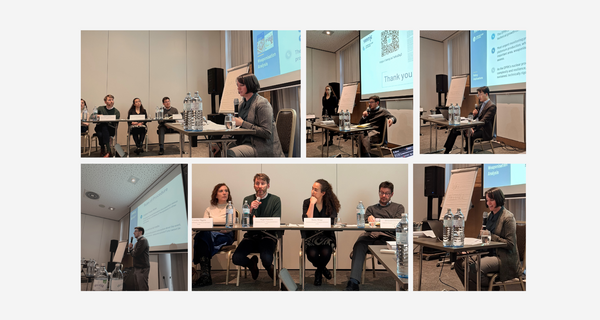
Last month, ONN completed its analytical contributions to the Open-Source Assessments of the DPRK’s Nuclear Programme project led by VERTIC in partnership with CNS and RUSI and funded by Global Affairs Canada. The project, running since 2019, culminated on 26 March 2026 with a launch event held in Vienna to present high-level findings on the DPRK’s nuclear fuel cycle and weaponisation capabilities to subject matter experts and Vienna-based diplomats.
The Verification Research, Training and Information Centre (VERTIC), the James Martin Center for Nonproliferation Studies (CNS) and the Royal United Services Institute (RUSI), with funding from Global Affairs Canada, conducted a multi-year project to assess the weapons of mass destruction programme in the DPRK. In the initial phase, VERTIC and CNS modelled the nuclear fuel cycle, from uranium mining to weapons-grade material production. The Open Nuclear Network (ONN), a PAX sapiens programme, assessed strategies the DPRK could be employing for its nuclear force structure based on both defence needs and fissile material constraints, derived from outputs of the VERTIC NFC model.
In the second phase, the project consortium shifted focus to the future of the DPRK’s nuclear programme, extending its research methodology to forecast developments from 2024 to 2034, including cumulative fissile material estimates for the next decade. VERTIC and ONN completed open-source assessments of the DPRK’s nuclear capabilities, namely on uranium enrichment; operation of the Experimental Light Water Reactor (ELWR) at Yongbyon; and weaponisation facilities and capabilities.
The full project research findings can be found here: https://arcg.is/1aKuDq3.
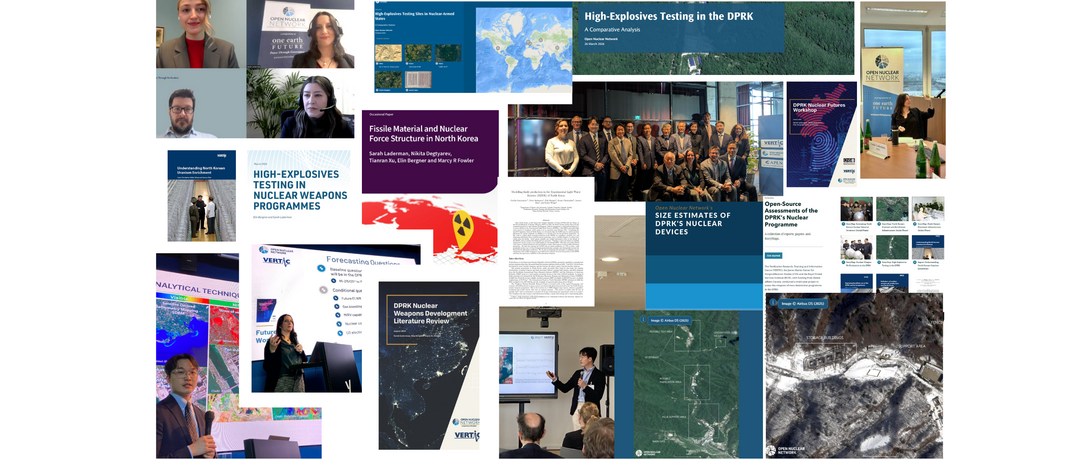
ONN’s specific contributions are highlighted below and could be found here. More analysis from this project will be finalised and published in the coming weeks so keep an eye on our website!
Publications
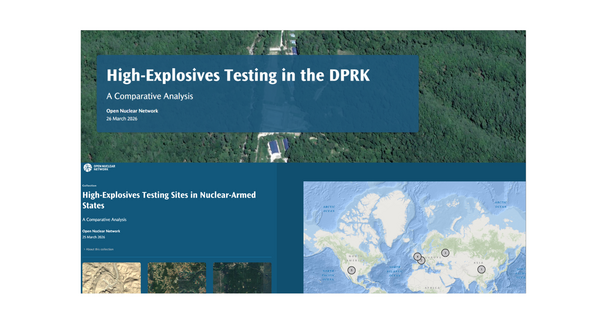
- “High-Explosives Testing in the DPRK: A Comparative Analysis” ArcGIS StoryMap that examines the DPRK’s high-explosive (HE) testing infrastructure and activities through a comparative analysis with known or suspected HE testing facilities in other nuclear-armed states, combined with detailed site-level assessments within the DPRK. In support of this research are two detailed publications:
-
“High-Explosives Testing in Nuclear Weapons Programmes” Drawing on open-source documentation, this research examines what HEs are, how they are used, how and why they are tested, and their unique signatures. By providing a general overview of HEs and their testing regimes, this paper seeks to aid other open-source researchers by providing a baseline level of information that can be used to analyse states’ nuclear weapons programmes, an area that is largely under-researched.
“High-Explosives Testing Sites in Nuclear-Armed States: A Comparative Analysis” ArcGIS StoryMap that provides an overview of the current status and evolution of HE testing capabilities in five nuclear-armed states, from which a comparative analysis with the DPRK was conducted
-
- “Understanding North Korean Uranium Enrichment” This ONN co-authored piece with VERTIC offers detailed analysis of the DPRK’s uranium enrichment programme based on previous project research and photographs shown by DPRK state media in 2024 and 2025. The paper includes revised estimates for the scope and potential enriched uranium output of the DPRK’s programme.
- “Modeling Plutonium Production in the Experimental Light Water Reactor of North Korea”This ONN co-authored article with VERTIC and Uppsala University in Princeton University’s Science & Global Security Journal integrates reactor core modelling with satellite imagery monitoring to evaluate how the ELWR at Yongbyon could contribute to fissile material production in the DPRK, namely plutonium production. By combining reactor core modelling with satellite imagery, it outlines plausible operation modes and observable indicators.
- “DPRK Nuclear Futures Workshop”In February 2024, VERTIC, ONN and CNS convened a two-day workshop to explore the future of the DPRK’s nuclear programme. The goal: to assess potential future scenarios shaping weapons-usable nuclear material production, delivery systems and verification options for any future negotiated deals. Using expert elicitation and forecasting techniques, the workshop generated critical insights into the DPRK’s evolving nuclear programme. Those insights are captured in this workshop report.
- “Fissile Material and Nuclear Force Structure in North Korea” This paper, one of the foundational analyses of this project, builds on work conducted by VERTIC to model North Korea’s nuclear fuel cycle. It integrates VERTIC’s estimates of North Korea’s production of weapons-usable fissile material – specifically weapons-grade plutonium and highly enriched uranium – into a comprehensive framework that assesses Pyongyang’s nuclear strategy. By examining the trade-offs in arsenal structure amid fissile-material constraints, the paper offers a nuanced exploration of North Korea’s approach to deterrence.
- “DPRK Nuclear Weapons Development Literature Review” In the course of its research on nuclear issues related to the DPRK, ONN found that there exists no recent comprehensive literature review related to the DPRK’s nuclear weapons development capabilities and associated strategy. This paper fills this gap by compiling and summarising all major published analyses released from 2017 (the year of the DPRK’s last nuclear test) to 2024 (the time of publication).
- "Size Estimates of DPRK's Nuclear Devices"This article presents estimates of the size of all DPRK nuclear warheads showcased to date, including the most recently displayed Hwasan-31, with the aim to provide more data for understanding the DPRK’s nuclear weapons development and programme.
Events
- 26 March 2026: Project Launch A project launch event held in Vienna by VERTIC, with support from ONN, marked the culmination of the project by sharing its findings with diplomatic, technical and non-governmental stakeholders in the future of the DPRK nuclear programme. It shared new insights into how open sources can shed light on the current and future status of that programme, and explored the policy implications of these findings, including on international priorities for future monitoring
- 17-18 November 2025: Workshop in SeoulONN and VERTIC, in partnership with the Asia-Pacific Leadership Network (APLN), hosted at a two-day workshop on Open-Source Assessments of the DPRK’s Nuclear Programme in Seoul. The project team convened regional and international experts to exchange insights, discuss key findings and provide feedback that sharpened the accuracy and real-world relevance of the research. As part of this collaborative effort, the workshop showcased presentations of the 2024–2025 open-source assessments of the DPRK’s nuclear programme, setting the stage for informed dialogue and practical recommendations.
- 11-12 September 2025: Presentation at Science-Peace-Security Conference in AachenONN and VERTIC gave a presentation at the Science-Peace-Security Conference in Aachen that demonstrated how emerging satellite capabilities can be applied to monitor a complex and evolving nuclear programs such as that of the DPRK. ONN highlighted new observations from 2023–2025, incorporating novel data sources and techniques that have yielded new insights into the programme.
- 8 April 2025: Public Webinar “North Korea’s Nuclear Path: Where Next?”ONN hosted a public webinar titled “North Korea’s Nuclear Path: Where Next?”, to discuss this project work with ONN and VERTIC participants. The event brought together leading experts to explore North Korea’s evolving nuclear capabilities and assess how forecasting, satellite imagery and fuel cycle analysis can illuminate the country’s future nuclear trajectory. It highlighted ONN’s unique methodological approaches to nuclear risk reduction.
- 15-16 February 2024: DPRK Futures WorkshopONN, in collaboration with VERTIC, CNS and the Swift Centre for Applied Forecasting, held a pioneering two-day workshop aimed at forecasting the developments in North Korea's nuclear and missile programmes over the coming decade. Hosted by the Vienna Centre for Disarmament and Non-Proliferation (VCDNP), the event gathered a carefully selected group of experts from diverse fields – including policy, technical, military and regional studies – to apply structured forecasting methodologies to this complex issue. Check out more videos talking about the event on ONN‘s YouTube channel.