ONN and Partners High-Level Dialogue on Nuclear-Weapon-Free Zones for Nuclear Risk Reduction

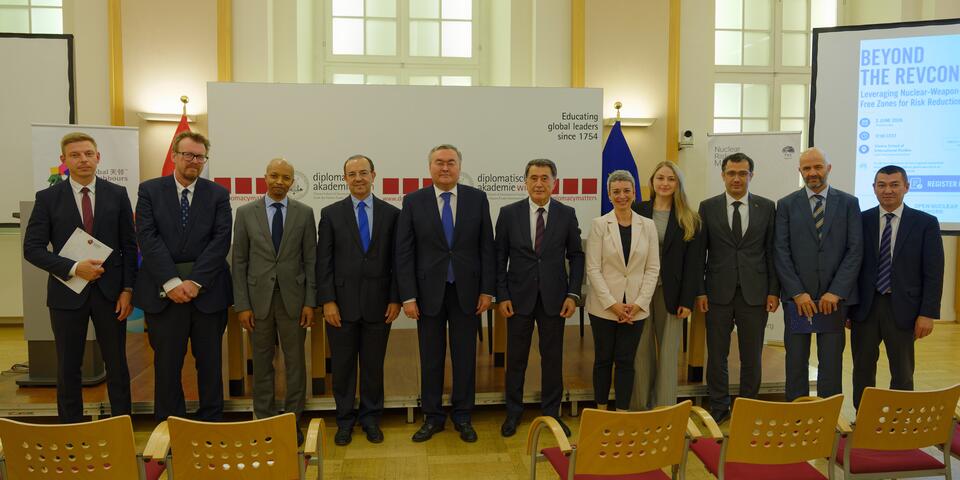
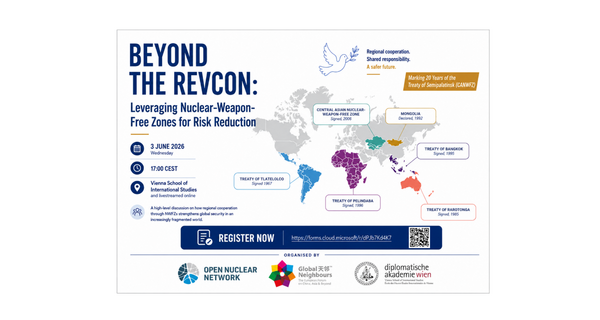
On 3 June 2026, Open Nuclear Network (ONN), in partnership with Global Neighbours and the Vienna School of International Studies, convened diplomats, policymakers, experts, students and civil society representatives in Vienna to discuss the role of Nuclear-Weapon-Free Zones (NWFZs) in strengthening regional and global security.

Held shortly after the conclusion of the 2026 Review Conference of the Treaty on the Non-Proliferation of Nuclear Weapons (NPT), the event also marked the 20th anniversary of the Treaty of Semipalatinsk establishing the Central Asian Nuclear-Weapon-Free Zone (CANWFZ). Bringing together representatives from existing NWFZs, international organisations and the diplomatic community, the discussion explored how regional nuclear restraint arrangements can contribute to trust-building, stability and nuclear risk reduction in an increasingly fragmented international environment.

Setting the Stage: Nuclear Risk Reduction in a Fragmented World

Opening the discussion, Siddharth Chatterjee, Chief Executive Officer of Global Neighbours, reflected on the human consequences of conflict and the importance of prevention as a cornerstone of international security. Drawing on decades of humanitarian experience, he argued that in an era of geopolitical tensions, active conflicts and declining trust, mechanisms that reduce the risk of miscalculation are more important than ever. Nuclear-Weapon-Free Zones, he noted, represent practical tools for confidence-building and cooperation across regions.

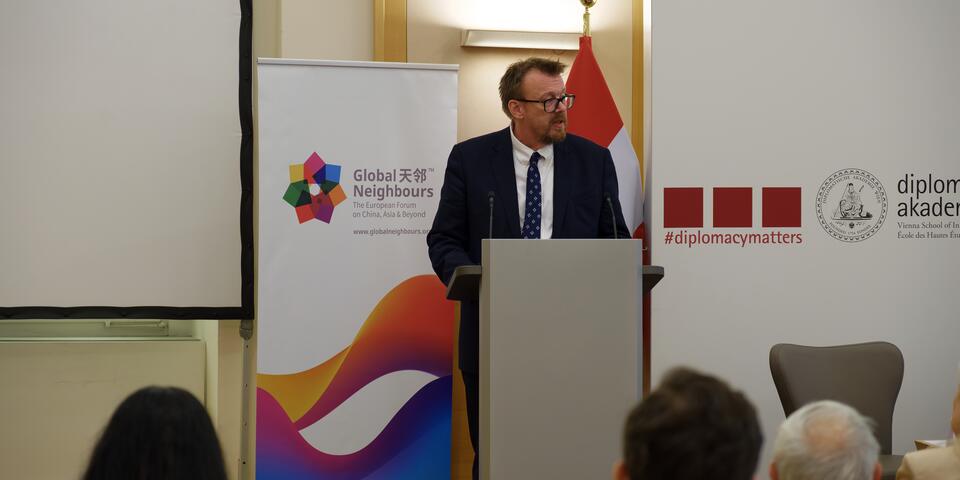
ONN Director Andreas Persbo focused on the catastrophic risks posed by nuclear weapons and the responsibility of states to reduce those risks. While nuclear-armed states continue to regard these weapons as essential to their security, he argued that Nuclear-Weapon-Free Zones demonstrate a different path: one based on legally binding commitments not to acquire, host or develop nuclear weapons. He noted that the absence of nuclear weapons within these zones means that the risk of their use by zonal states is effectively zero.

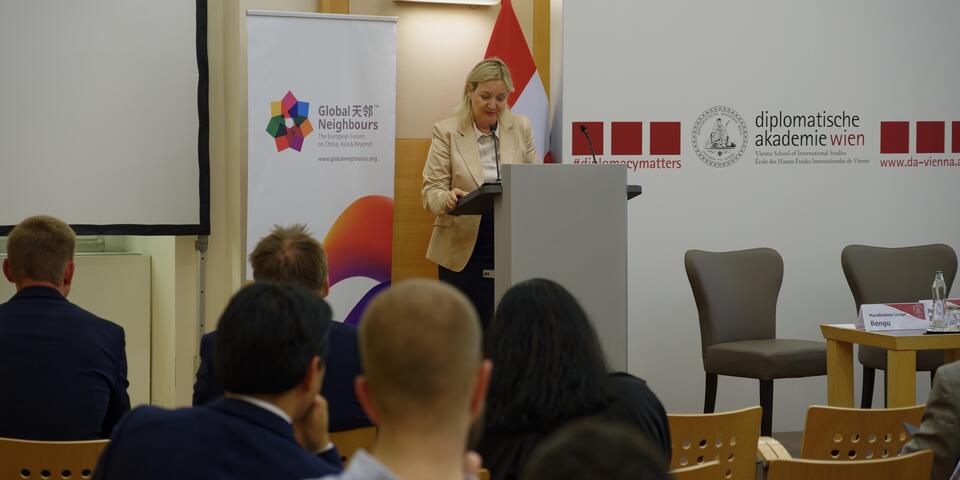
Representing the Vienna School of International Studies, Martina Schubert, Deputy Director, situated the discussion within the broader context of international disarmament efforts and Austria’s longstanding support for nuclear non-proliferation and disarmament initiatives. She highlighted the continuing importance of education, diplomacy and multilateral dialogue in addressing contemporary security challenges.

Twenty Years of the Central Asian Nuclear-Weapon-Free Zone

The event marked the 20th anniversary of the Treaty of Semipalatinsk, which established the Central Asian Nuclear-Weapon-Free Zone.

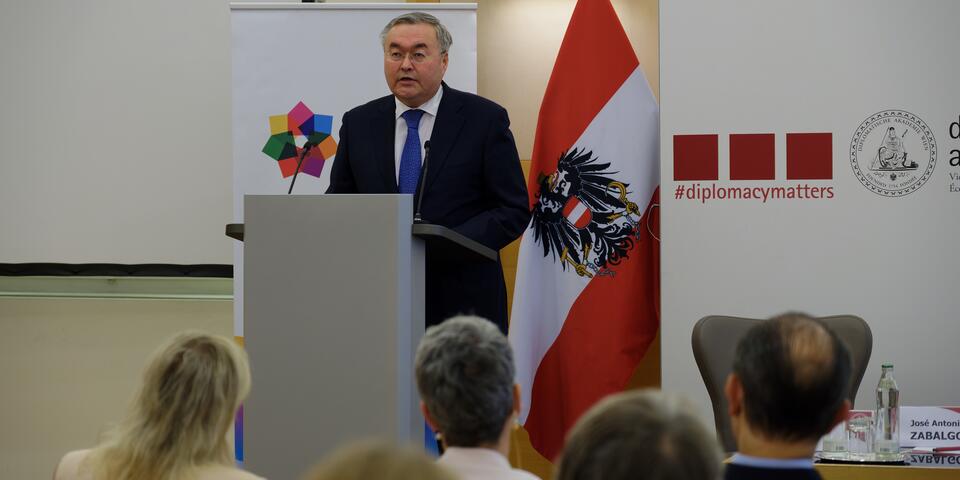
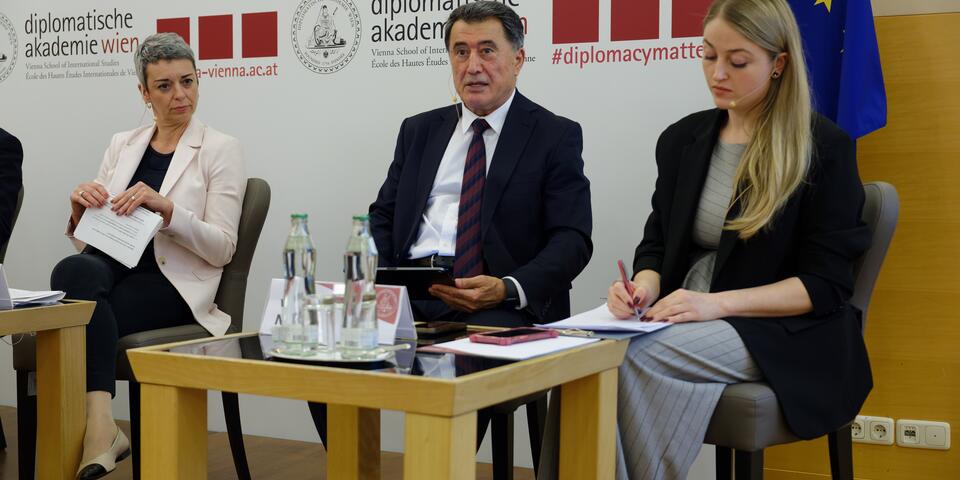
In his keynote address, H.E. Mukhtar Tileuberdi, Ambassador of Kazakhstan, reflected on the region’s transformation from a site of extensive nuclear testing to a leading advocate for nuclear restraint. Recalling Kazakhstan’s decision to close the Semipalatinsk Test Site and renounce the world’s fourth-largest nuclear arsenal, he argued that security can be built through cooperation, transparency and trust, not only through deterrence. The Central Asian Nuclear-Weapon-Free Zone, he noted, remains a powerful example of how states can collectively reduce nuclear risks while strengthening regional security.

Building on this theme, H.E. Vladimir Norov, former Minister of Foreign Affairs of Uzbekistan, reflected on the practical considerations that led Central Asian states to establish the zone. He highlighted the region’s experience with the humanitarian and environmental consequences of nuclear testing, the importance of regional cooperation, and the role of international security assurances in making nuclear restraint sustainable. He also emphasised the unique characteristics of the Central Asian zone, including its requirement that all member states implement the IAEA Additional Protocol, creating one of the strongest regional verification frameworks in the world.

Different Regions, Shared Goals

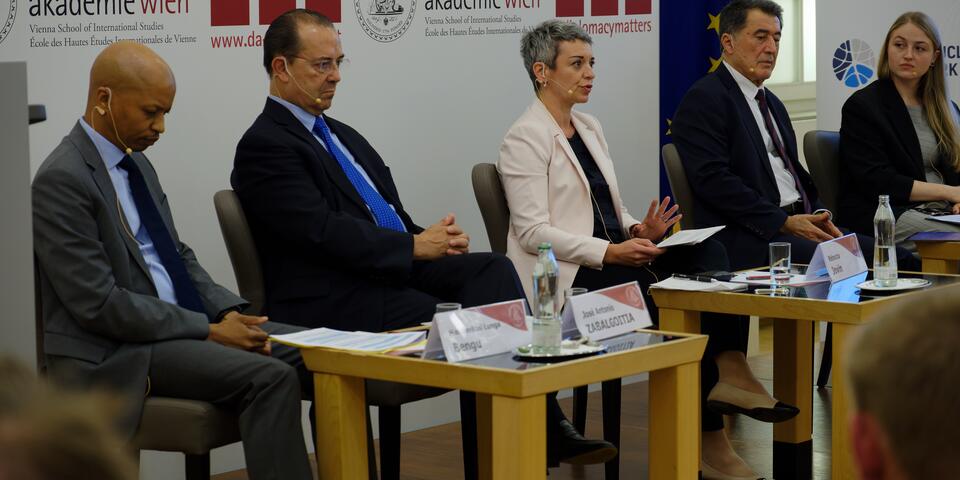
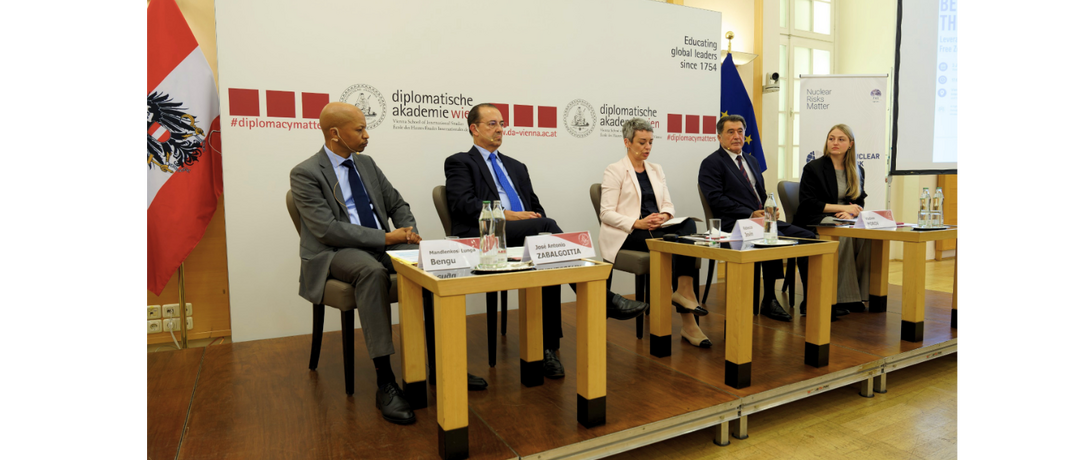
The panel discussion brought together perspectives from Mongolia, Central Asia, Latin America and the Caribbean, Africa and the United Nations.


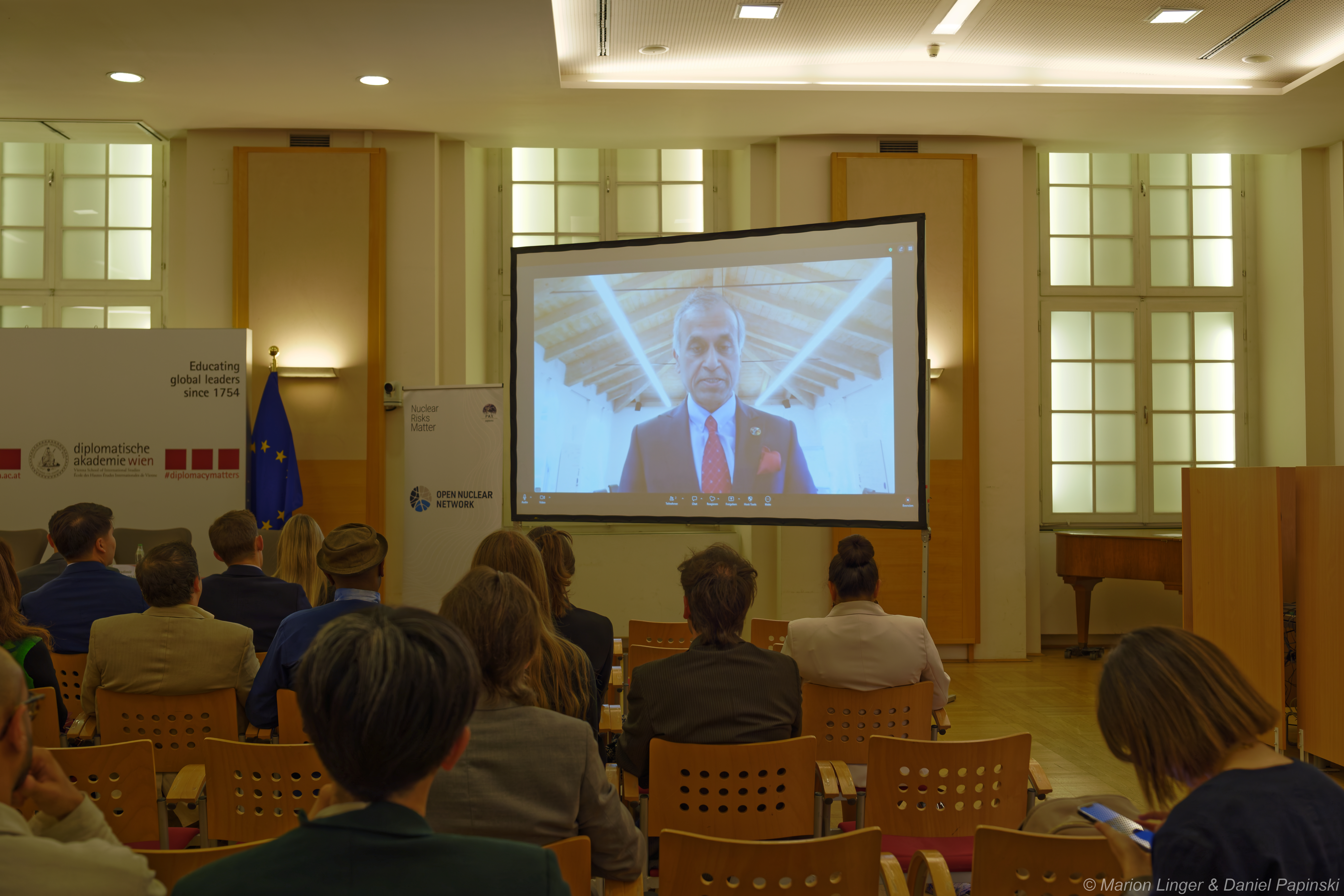
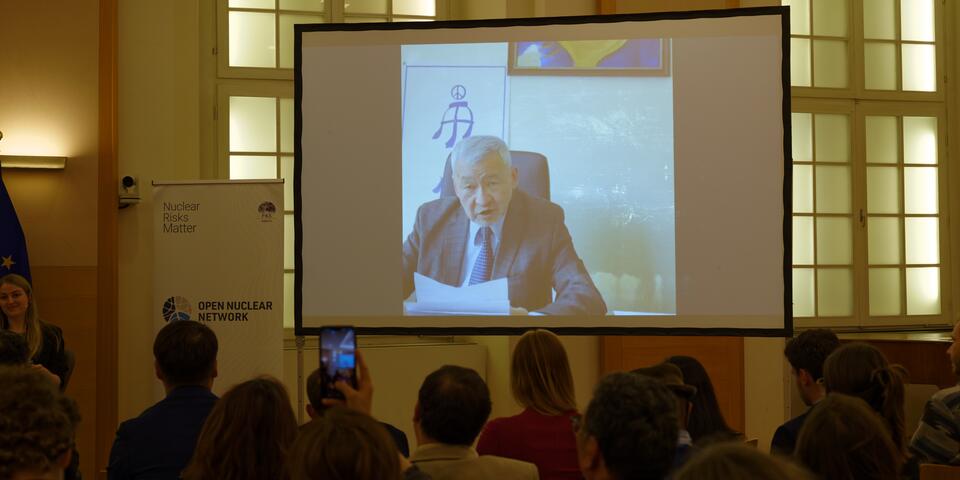
Through a video message, H.E. Jargalsaikhan Enkhsaikhan, former Permanent Representative of Mongolia to the United Nations in New York and Vienna and Chair of Blue Banner, reflected on Mongolia’s more than three decades of experience promoting nuclear non-proliferation and disarmament. He highlighted the contribution of Nuclear-Weapon-Free Zones to risk reduction, trust-building and confidence-building, noting that more than 115 states now participate in existing NWFZ arrangements. Looking ahead, he pointed to the potential emergence of new “second-generation” zones in regions such as the Middle East, Northeast Asia, and the Arctic, while also advocating for greater recognition of individual states, such as Mongolia, within the NWFZ framework. He argued that expanding the concept to include such states could strengthen and broaden the global regime for nuclear restraint.

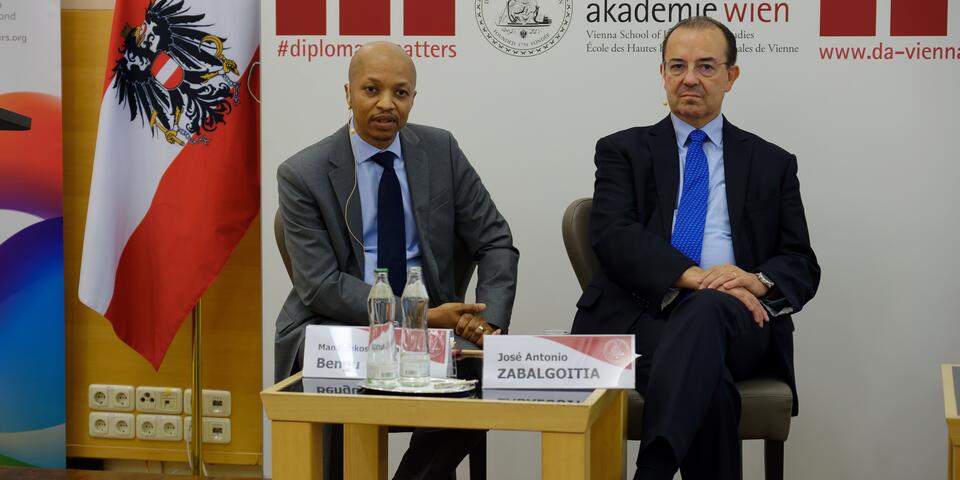
H.E. José Antonio Zabalgoitia, Permanent Representative of Mexico to the International Organizations in Vienna, offered a historical perspective on the Treaty of Tlatelolco, which established the first Nuclear-Weapon-Free Zone in a populated region. He argued that NWFZs should not be viewed solely through the lens of idealism or disarmament advocacy. Rather, they emerged as practical responses to security concerns, particularly in the aftermath of the Cuban Missile Crisis. For Latin American states, reducing the risk of nuclear confrontation was not simply a moral aspiration but a matter of national and regional security.

From the African perspective, Lunga Bengu, Deputy Permanent Representative of South Africa to the International Organizations in Vienna, reflected on the significance of the Treaty of Pelindaba and the continent’s long-standing commitment to preventing the spread of nuclear weapons. He highlighted the role of Nuclear-Weapon-Free Zones in creating confidence among neighbouring states and supporting broader development goals, while also reiterating Africa’s support for the establishment of a Middle East zone free of nuclear weapons and other weapons of mass destruction.

Across the discussion, a common theme emerged: Nuclear-Weapon-Free Zones are not merely symbolic political statements. They create legally binding commitments, strengthen transparency and verification measures, reduce incentives for nuclear competition, and establish regional norms that contribute to long-term stability and security.

Strengthening the Global Nuclear Architecture

The discussion also explored the role of Nuclear-Weapon-Free Zones within the broader international non-proliferation regime, with Rebecca Jovin, Chief of Office of the United Nations Office for Disarmament Affairs (UNODA) in Vienna, highlighting how Nuclear-Weapon-Free Zones reinforce the objectives of the NPT by translating non-proliferation commitments into concrete regional arrangements. She provided an update on the UN-mandated Comprehensive Study on Nuclear-Weapon-Free Zones currently being prepared by a Qualified Group of Experts, which seeks to assess developments across existing zones, identify lessons learned and explore options for strengthening cooperation among them and the possible establishment of new zones, including in the Middle East. 

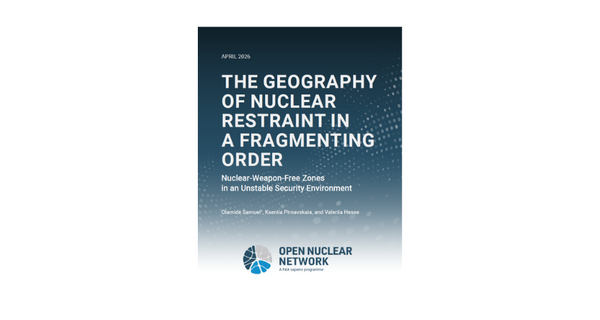
In the discussion, H.E. Norov mentioned the important role civil society plays in establishing and supporting the zones, sharing an example of James Martin Center for Nonproliferation Studies (CNS) being crucial for the establishment of the Central Asian zone. In a similar vein, ONN has been informally supporting the abovementioned comprehensive study  by conducting a project examining the present and future of Nuclear-Weapon-Free Zones through consultations with representatives from all existing zones and other key stakeholders. The resulting report – “The Geography of Nuclear Restraint in a Fragmenting Order” - highlights the growing role of NWFZs in nuclear risk reduction and regional security while offering recommendations to strengthen cooperation among zones and deepen engagement by and with Nuclear-Weapon States.

In this context, speakers noted that, at a time when arms control mechanisms are under strain and confidence in multilateral institutions is being tested, Nuclear-Weapon-Free Zones remain among the most durable examples of regional implementation of non-proliferation and risk reduction commitments.

Looking Ahead

The discussion concluded with reflections on the future of Nuclear-Weapon-Free Zones and their continued relevance in a changing security environment.

Participants highlighted the importance of strengthening cooperation among existing zones, enhancing dialogue with nuclear-weapon states, and ensuring that security assurances remain credible and effective. Speakers also reflected on future possibilities for expanding the Nuclear-Weapon-Free Zone regime, including efforts to establish such zones in regions like the Middle East, North East Asia, South Asia and Europe , while recognising the significant political and security challenges involved. Participants noted that future developments could follow both traditional regional models and innovative approaches such as Mongolia’s single-state Nuclear-Weapon-Free zone status, which offers an alternative pathway for States that fall outside existing zonal arrangements.

Key Takeaways

Across the keynote, panel discussion and exchanges with the audience, several points of convergence emerged.

  • H.E. Mukhtar Tileuberdi and H.E. Vladimir Norov highlighted how the Central Asian Nuclear-Weapon-Free Zone transformed a region marked by the legacy of nuclear testing into a framework for cooperation, transparency and trust.


  • Through his video message, H.E. Jargalsaikhan Enkhsaikhan highlighted Mongolia’s experience as a single-state Nuclear-Weapon-Free Zone and argued that expanding the framework to include individual states could strengthen the regime and complement efforts to establish new zones in regions such as the Middle East, Northeast Asia and the Arctic.


  • Drawing on the experience of the Treaty of Tlatelolco, H.E. José Antonio Zabalgoitia emphasised that Nuclear-Weapon-Free Zones emerged as pragmatic responses to security challenges and continue to provide tangible regional security benefits.


  • Lunga Bengu highlighted how the African experience demonstrates the role of Nuclear-Weapon-Free Zones in strengthening regional confidence, supporting development and reinforcing the broader non-proliferation regime.


  • Rebecca Jovin highlighted the ongoing UN-mandated Comprehensive Study on Nuclear-Weapon-Free Zones, which seeks to assess lessons learned, strengthen cooperation among existing zones and explore future opportunities for the regime.


Despite growing geopolitical tensions and challenges to the international security architecture, speakers agreed that dialogue, cooperation and regional approaches continue to offer practical pathways for reducing nuclear risks and strengthening international security.

As discussions on the future of nuclear governance continue beyond the 2026 NPT Review Conference, Nuclear-Weapon-Free Zones remain among the clearest examples of how states can work together to reduce risks, build trust and strengthen both regional and international security.

Watch the full recording

Beyond the RevCon: Leveraging Nuclear-Weapon-Free Zones for Risk Reduction

Watch Beyond the RevCon: Leveraging Nuclear-Weapon-Free Zones for Risk Reduction on YouTube.

The recording of the event can also be accessible from the Vienna School of International Studies’ YouTube channel: https://www.youtube.com/watch?v=ZYw5Bv9odOI