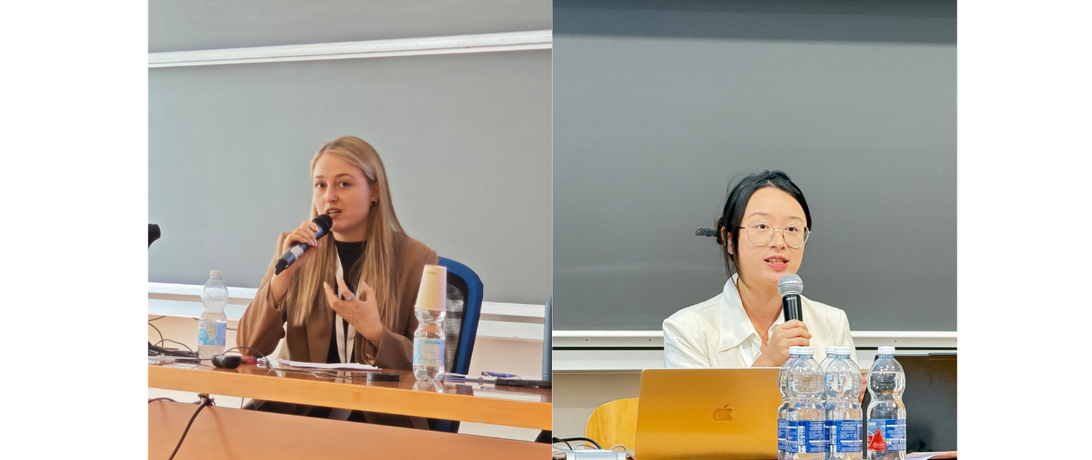
ONN Network and Engagement Specialist Kseniia Pirnavaskaia and ONN Intern Yuqin Wang participated and presented at the 2026 European Student Young Pugwash Conference “Peace and Security at a Crossroads”, held on 25-27 September 2026 in Pisa, Italy.
On 25 September, Kseniia Pirnavskaia, ONN’s Network and Engagement Specialist and Deputy Director of International Student/Young Pugwash (ISYP), chaired the opening keynote panel at the European Student/Young Pugwash Conference in Pisa: “The Past, Present and Future of Non-Proliferation, Arms Control and Disarmament.”
The panel brought together Matthew Evangelista (Cornell University), Ludovica Castelli (IAI/EUNPDC), Francesco Forti (University of Pisa) and Tea Gradassi (Senzatomica). Their perspectives connected the historical foundations of nuclear deterrence with Europe’s evolving security environment, the ethical responsibilities of scientists and the role of civil society in advancing nuclear risk reduction. By bringing these perspectives into dialogue with young researchers and practitioners, the session offered a space to examine inherited assumptions about nuclear order and consider how research, policy and public engagement can help reduce reliance on nuclear weapons and prevent nuclear conflict. For ONN, this engagement supports an essential part of nuclear risk reduction: equipping the next generation to think critically, work across disciplines and sustain informed inter-generational dialogue on nuclear dangers.
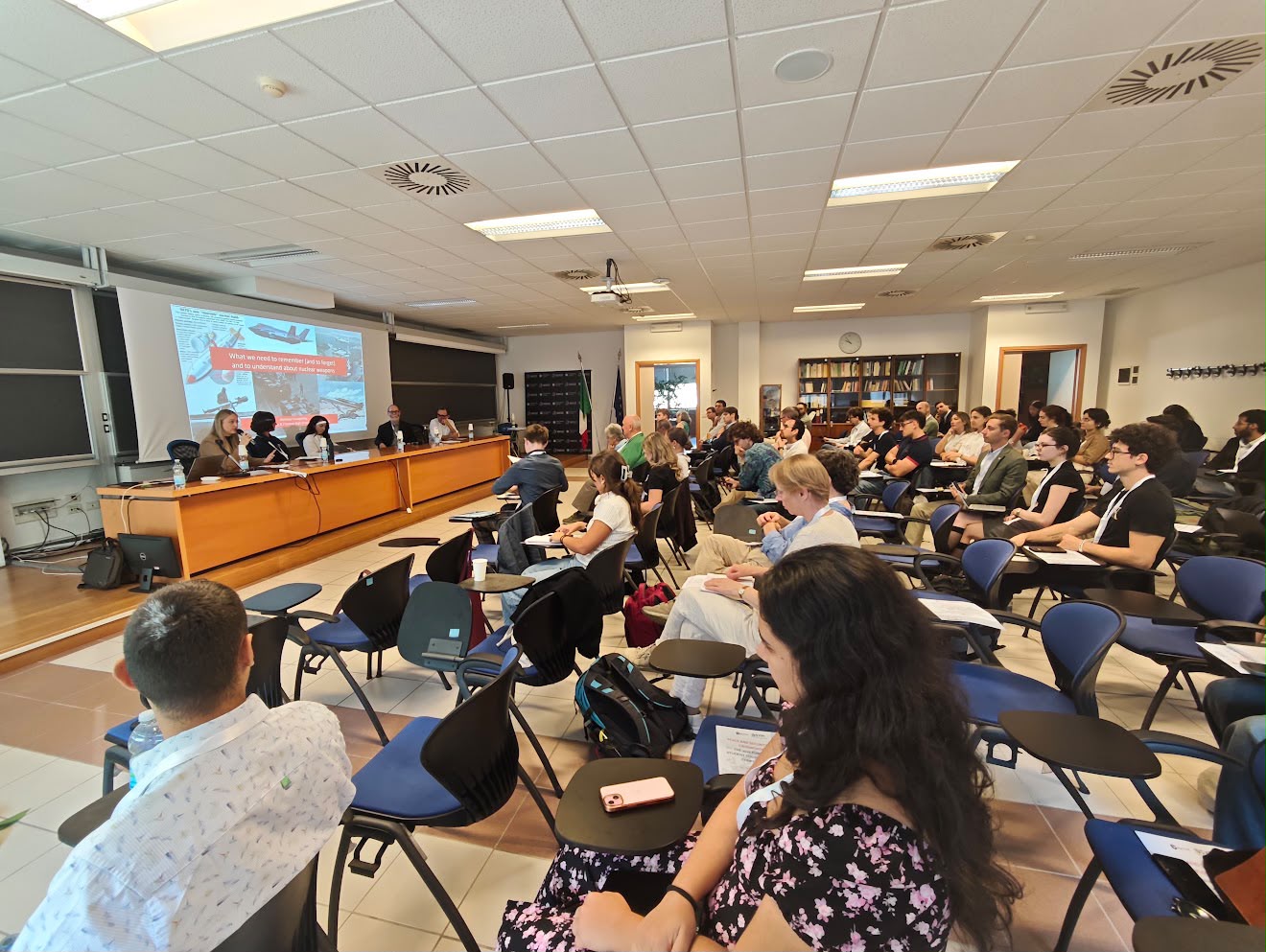
Photo credit: ONN
On 26 September, Yuqin Wang, ONN's Intern, presented her preliminary research, “Seeing Is No Longer Believing: AI-Generated Visuals in the Nuclear Information Environment”, explaining how, in a nuclear crisis, images or videos of a strike, a damaged facility or a radiation release can shape how governments and the public interpret events before authoritative information is available. Her presentation examined how generative AI is changing the way such visuals are created, manipulated and contested. She identified three interconnected challenges: fully synthetic visuals, AI-assisted manipulation of authentic imagery, and the doubt created by genuine imagery being falsely dismissed as AI-generated. Together, these can fuel misperception at the moments when accurate information matters most, while eroding trust in the evidence decision-makers rely on.
Drawing on ONN’s work under the Global Partnership Countering WMD Disinformation Initiative, she introduced the AMAR framework – Awareness, Monitoring, Assessment and Response – as a practical approach to strengthening preparedness and coordinated communication. She concluded with recommendations for international organisations, state governments, researchers and analysts, arguing that detection should be accompanied by proactive preparation, implication assessment and clear communication.
The presentation sparked lively discussion. Participants asked how stakeholders can pre-emptively debunk visual disinformation, how quickly questionable imagery can realistically be verified once it starts circulating, and whether existing frameworks can help assess the authenticity of visual content. The substantive discussion reflected a growing recognition that managing the information environment is becoming an integral part of reducing nuclear risk.
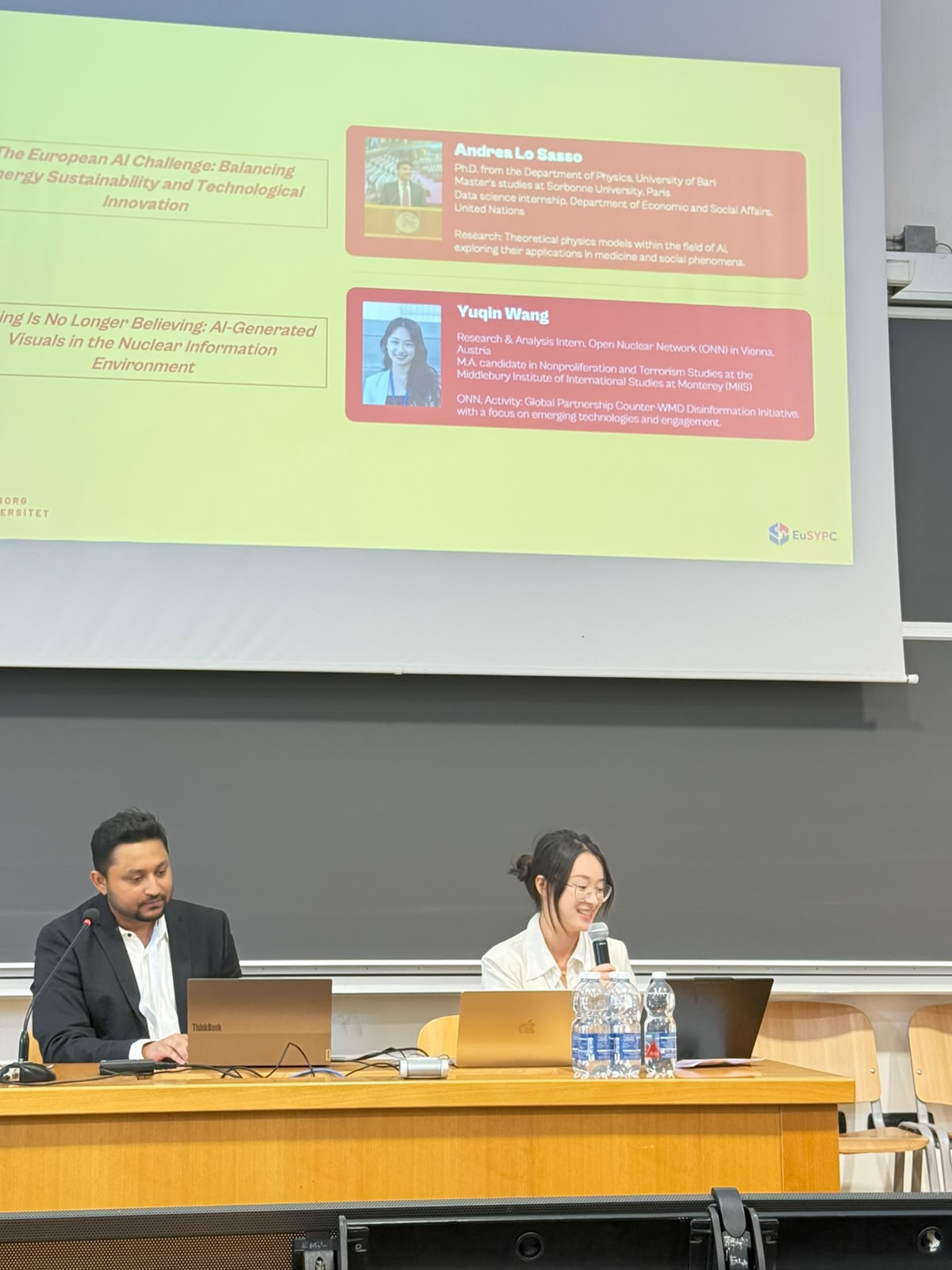
Photo credit: ONN