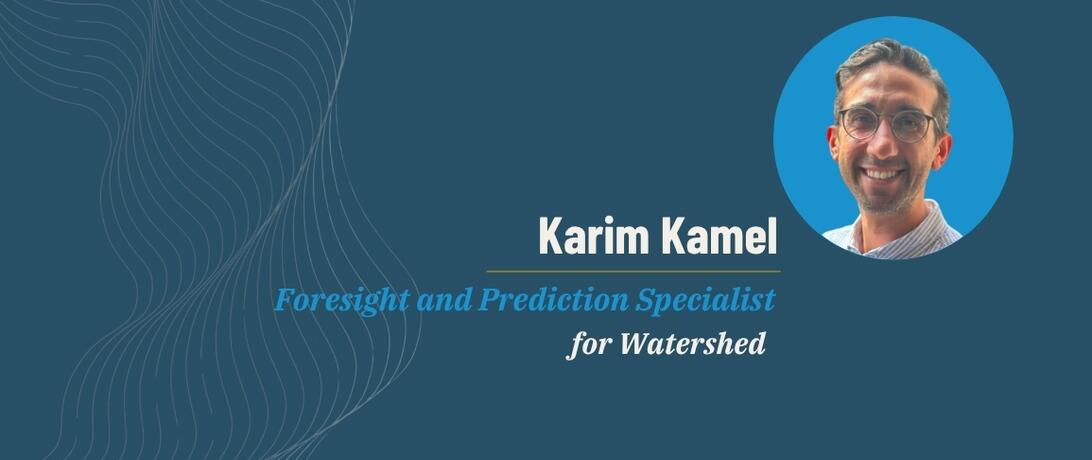
The article traces Karim Kamel's journey from discovering foresight methodologies to applying them at Open Nuclear Network (ONN), where he works to integrate collaborative approaches into nuclear risk analysis and dialogue. It highlights how foresight methods can help move discussions beyond individual expertise by encouraging participants to challenge assumptions, incorporate diverse perspectives and build a shared understanding of future risks.
A central focus of the article is the Delphi method, one of Kamel's preferred foresight tools. Originally developed by RAND in the 1950s, the methodology uses anonymous rounds of expert assessment and structured feedback to reduce bias, encourage reflection and strengthen collective judgement. Rather than seeking precise predictions, the approach helps participants better understand uncertainty and develop more robust policy insights.
The feature also highlights how ONN is applying foresight methodologies across its work. Recent initiatives include using the Delphi method to explore how chemical, biological, radiological and nuclear (CBRN) disinformation could contribute to conflict escalation, as well as incorporating foresight exercises into Track 1.5 and Track 2 dialogues to foster more open, evidence-based discussion on nuclear risks.