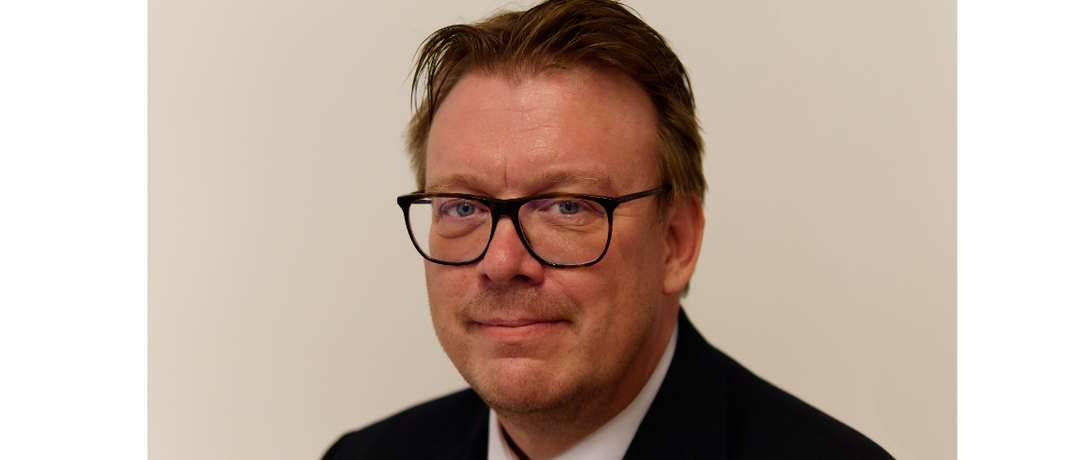
ONN Director Andreas Persbo spoke at the workshop “Supporting Nuclear Disarmament Verification Expertise in Non-Nuclear Weapons States,” held on 13–14 April 2026 in Cape Town, South Africa.
The workshop was organised by the Department of Political Studies at the University of the Western Cape, in collaboration with VERTIC and the African Nuclear Disarmament Verification Research and Innovation Hub.
In his presentation, “The Process and Challenges of Nuclear Disarmament Verification,” Persbo emphasised that verification enhances treaty implementation and is a fundamental component of effective regimes. Drawing on an analogy from criminology, he noted that the likelihood of being caught is often more effective in ensuring compliance than the severity of punishment—an insight that also applies to the international system.
In the context of the NPT, Persbo highlighted that verification continues to receive relatively strong support among member states, even as progress in other areas remains limited. He referred to the principles of transparency, verifiability and irreversibility, as well as the role of the 2000 NPT Review Conference in advancing verification work.
Persbo stressed that verification is often narrowly framed as warhead dismantlement, but in practice it encompasses a much broader process. This includes declarations, verification of those declarations, monitoring (both on-site and remote), authentication of equipment, verification and observation of dismantlement procedures, and the management and monitoring of nuclear materials. He also underlined the importance of ensuring non-reconstitution, meaning that dismantled programmes cannot be rebuilt.
He noted that this process can take many years, even decades, to complete with high confidence.
On the technical side, Persbo highlighted that many of the necessary solutions for warhead verification already exist, and that non-nuclear-weapon states can play a meaningful role in these efforts. The primary challenge, he argued, is not technical feasibility, but how to integrate existing tools into systems that are credible, practical, and politically acceptable. This shifts the focus from whether verification is possible to questions of confidence, intrusiveness, and governance.
Persbo also emphasised that nuclear disarmament verification must increasingly be a multilateral endeavour. Broader participation can enhance confidence, distribute technical and financial burdens, and enable non-nuclear-weapon states to contribute actively to verification processes.
Looking ahead, he referenced ongoing UN processes, including the Group of Governmental Experts and the forthcoming Group of Scientific and Technical Experts, noting their role in advancing technical understanding and building a shared evidence base.
In conclusion, Persbo pointed to political will as the central challenge. While progress may be incremental, he expressed cautious optimism that continued support for verification within the NPT framework provides a foundation for further work.
ONN thanks the organisers for the invitation and for convening an important discussion on the future of nuclear disarmament verification.