Executive Summary
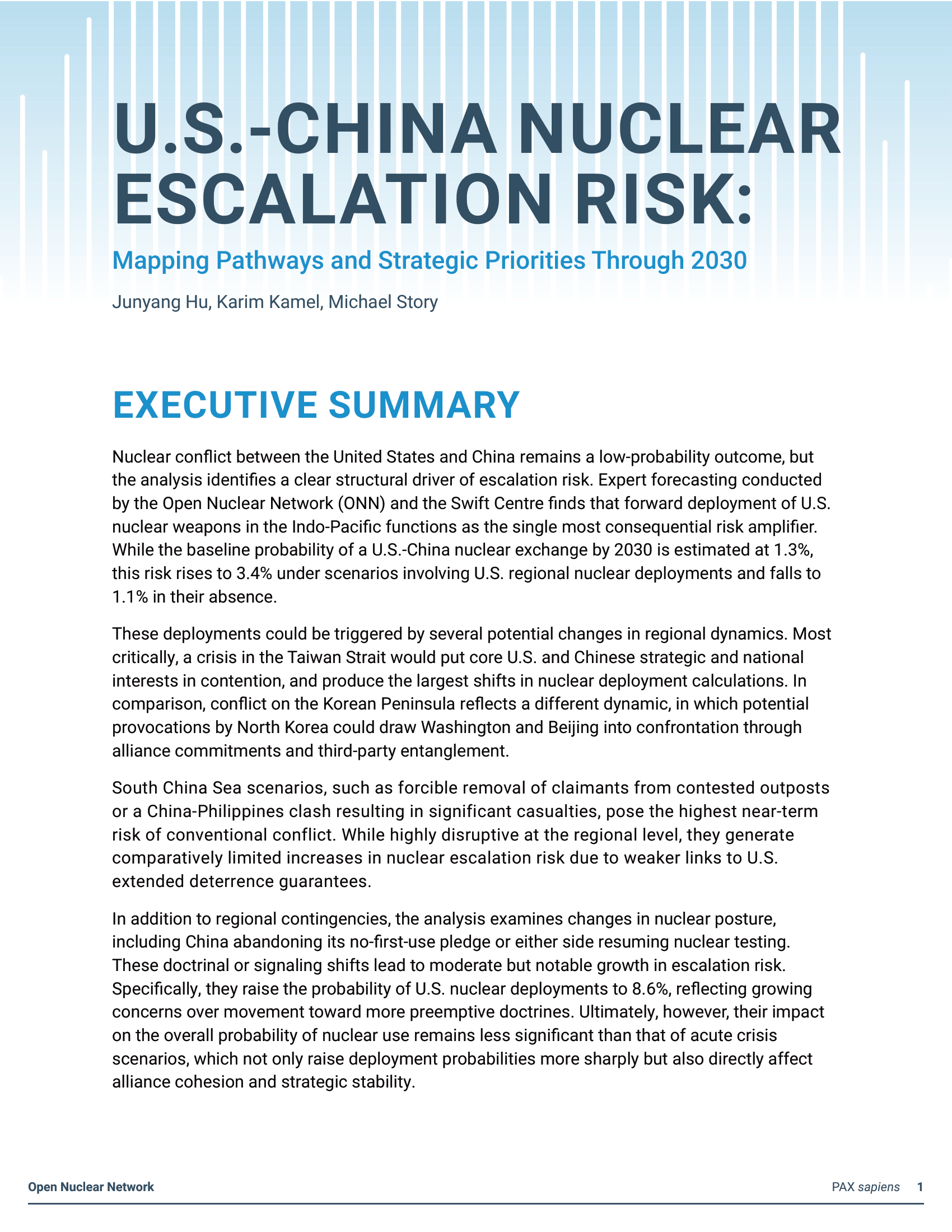
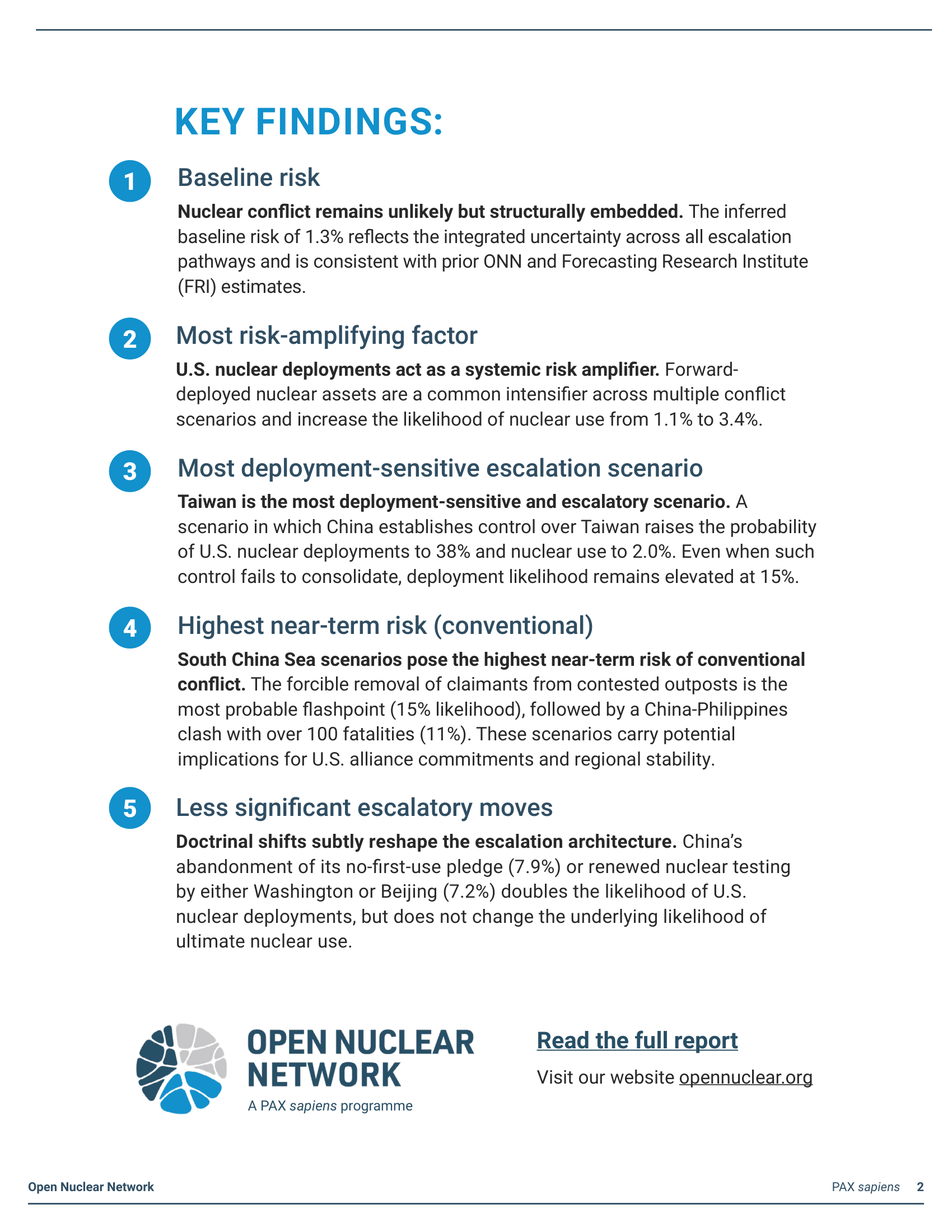
Nuclear conflict between the United States and China remains a low-probability outcome, but the analysis identifies a clear structural driver of escalation risk. Expert forecasting conducted by the Open Nuclear Network (ONN) and the Swift Centre finds that forward deployment of US nuclear weapons in the Indo-Pacific functions as the single most consequential risk amplifier. While the baseline probability of a US-China nuclear exchange by 2030 is estimated at 1.3%, this risk rises to 3.4% under scenarios involving US regional nuclear deployments and falls to 1.1% in their absence.
These deployments could be triggered by several potential changes in regional dynamics. Most critically, a crisis in the Taiwan Strait would put core U.S. and Chinese strategic and national interests in contention, and produce the largest shifts in nuclear deployment calculations. In comparison, conflict on the Korean Peninsula reflects a different dynamic, in which potential provocations by North Korea could draw Washington and Beijing into confrontation through alliance commitments and third-party entanglement.
South China Sea scenarios, such as forcible removal of claimants from contested outposts or a China-Philippines clash resulting in significant casualties, pose the highest near-term risk of conventional conflict. While highly disruptive at the regional level, they generate comparatively limited increases in nuclear escalation risk due to weaker links to US extended deterrence guarantees.
In addition to regional contingencies, the analysis examines changes in nuclear posture, including China abandoning its no-first-use pledge or either side resuming nuclear testing. These doctrinal or signaling shifts lead to moderate but notable growth in escalation risk. Specifically, they raise the probability of U.S. nuclear deployments to 8.6%, reflecting growing concerns over movement toward more preemptive doctrines. Ultimately, however, their impact on the overall probability of nuclear use remains less significant than that of acute crisis scenarios, which not only raise deployment probabilities more sharply but also directly affect alliance cohesion and strategic stability