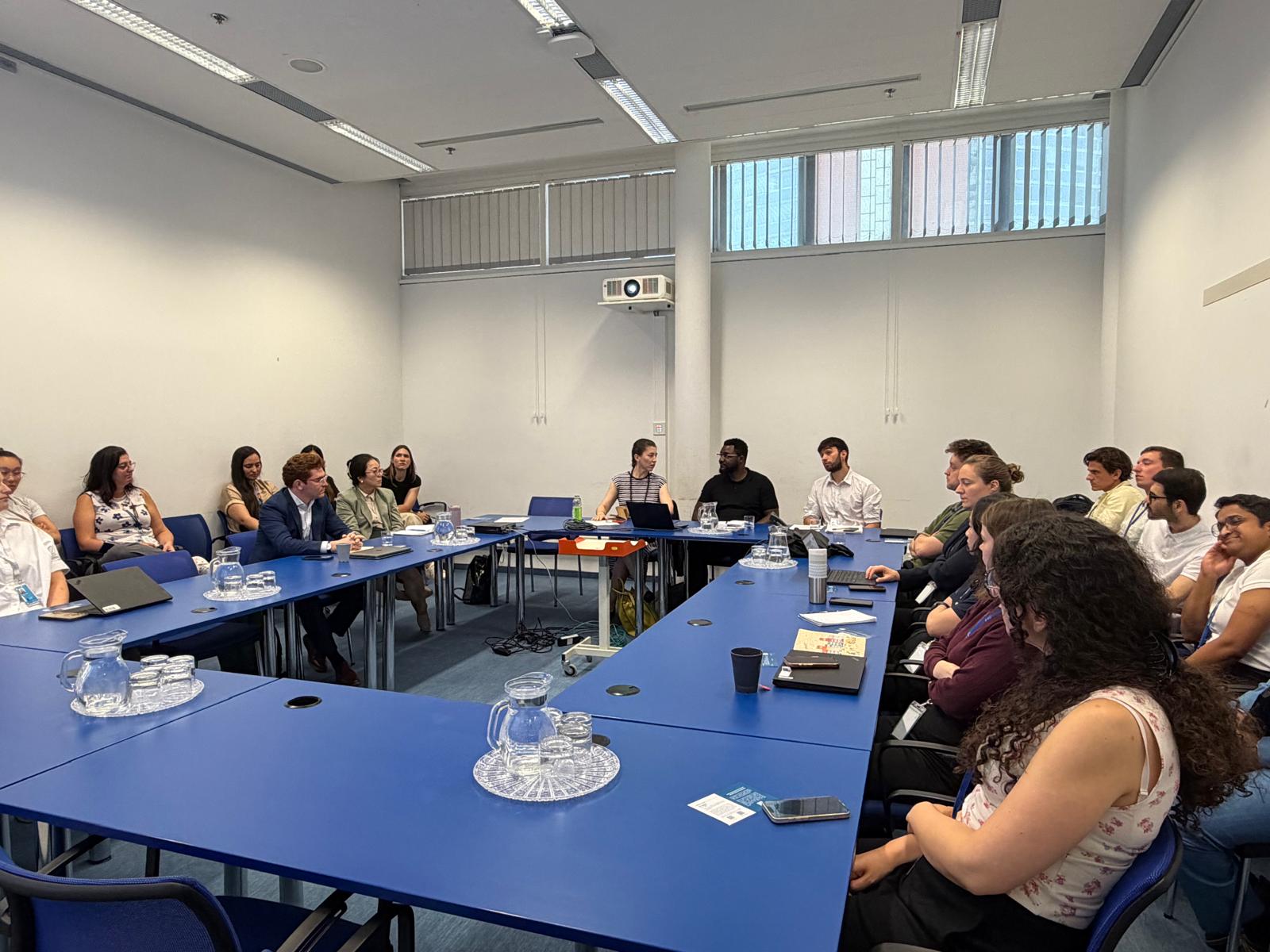
Organised and hosted by the United Nations-Nuclear Young Generation (UN-NYG) at the Vienna International Centre, the event "From RevCon to Reform: Conversations on the Future of the NPT" brought together young professionals in the nuclear field to reflect on how the NPT has evolved since its entry into force and how it can continue to reduce nuclear risks in an increasingly complex international security environment. The session featured presentations by ONN Deputy Director and Associate Director for Research and Analysis Marcy R. Fowler and ONN Network and Engagement Specialist Olamide Samuel.
A changing world, an enduring treaty
Opening the discussion, Fowler examined how the international security landscape has evolved since the NPT entered into force in 1970. She explored how emerging technologies, artificial intelligence, open-source information and shifting geopolitical dynamics present both opportunities and challenges for nuclear governance, while highlighting the growing role of NGOs and civil society in providing transparent analysis and supporting informed decision-making.
Why the NPT still matters
The discussion then focused on the NPT's continued relevance as the cornerstone of the global non-proliferation regime. Samuel outlined the Treaty's three pillars - non-proliferation, peaceful uses of nuclear energy and disarmament - highlighting both the progress achieved since 1970 and the challenges that remain. Reflecting on the 2026 NPT Review Conference, the speakers noted that while no consensus outcome was reached, the continued functioning of safeguards, verification and dialogue demonstrates the Treaty's enduring value and resilience.
Looking ahead, ONN experts explored how the NPT can remain effective in a changing geopolitical and technological landscape. They discussed the pressures facing the Treaty, from geopolitical competition and proliferation challenges to emerging technologies and evolving safeguards issues, and argued that these require adaptation rather than replacement. The discussion also emphasised that maintaining the Treaty's legitimacy will depend on credible verification, transparency, and confidence in the consistent application of its rules.
The Role of the Next Generation
Throughout the discussion, participants were invited to reflect on what success for the NPT should look like in the decades ahead. Conversations explored practical measures to reduce nuclear risks, strengthen verification, expand access to peaceful nuclear technology and maintain international cooperation despite political disagreements.
The session also highlighted the important role that young professionals can play in shaping the future of nuclear governance. From research and analysis to forecasting, open-source intelligence and international engagement, participants learned more about ONN's projects and explored how emerging professionals can contribute to strengthening the non-proliferation regime and reducing nuclear risks.