
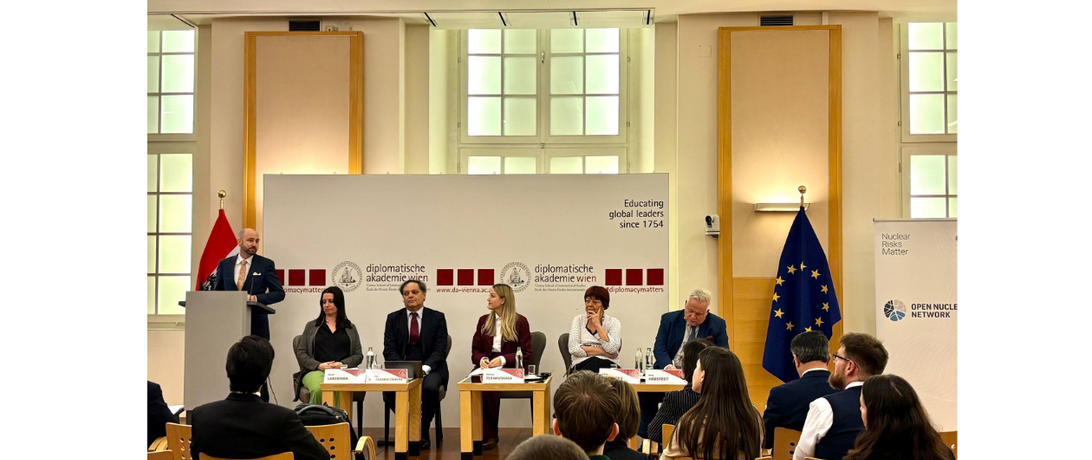
As 2026 approaches, a pivotal year for global nuclear governance, ONN and the Diplomatic Academy Vienna convened diplomats, experts and students to ask what common ground still exists. The discussion explored rising nuclear risks, the role of science in rebuilding trust and the small but meaningful steps states can still take.
Last week, Open Nuclear Network (ONN), a programme of PAX sapiens, and the Vienna School of International Studies brought together diplomats, policymakers, experts and students to grapple with a simple but difficult question: What can we still agree on when it comes to nuclear governance?
As the world approaches 2026, a year that will see Review Conferences of both the Treaty on the Non-Proliferation of Nuclear Weapons (NPT) and the Treaty on the Prohibition of Nuclear Weapons (TPNW), alongside the expiration of the New START Treaty, participants explored how to preserve cooperation and reduce nuclear risks in an increasingly fragmented international environment. The event drew around 60 participants in the room and around 200 viewers online, underscoring the continued interest of the Vienna community in nuclear diplomacy and global security.
Setting the Stage: 2026 as a Pivotal Year
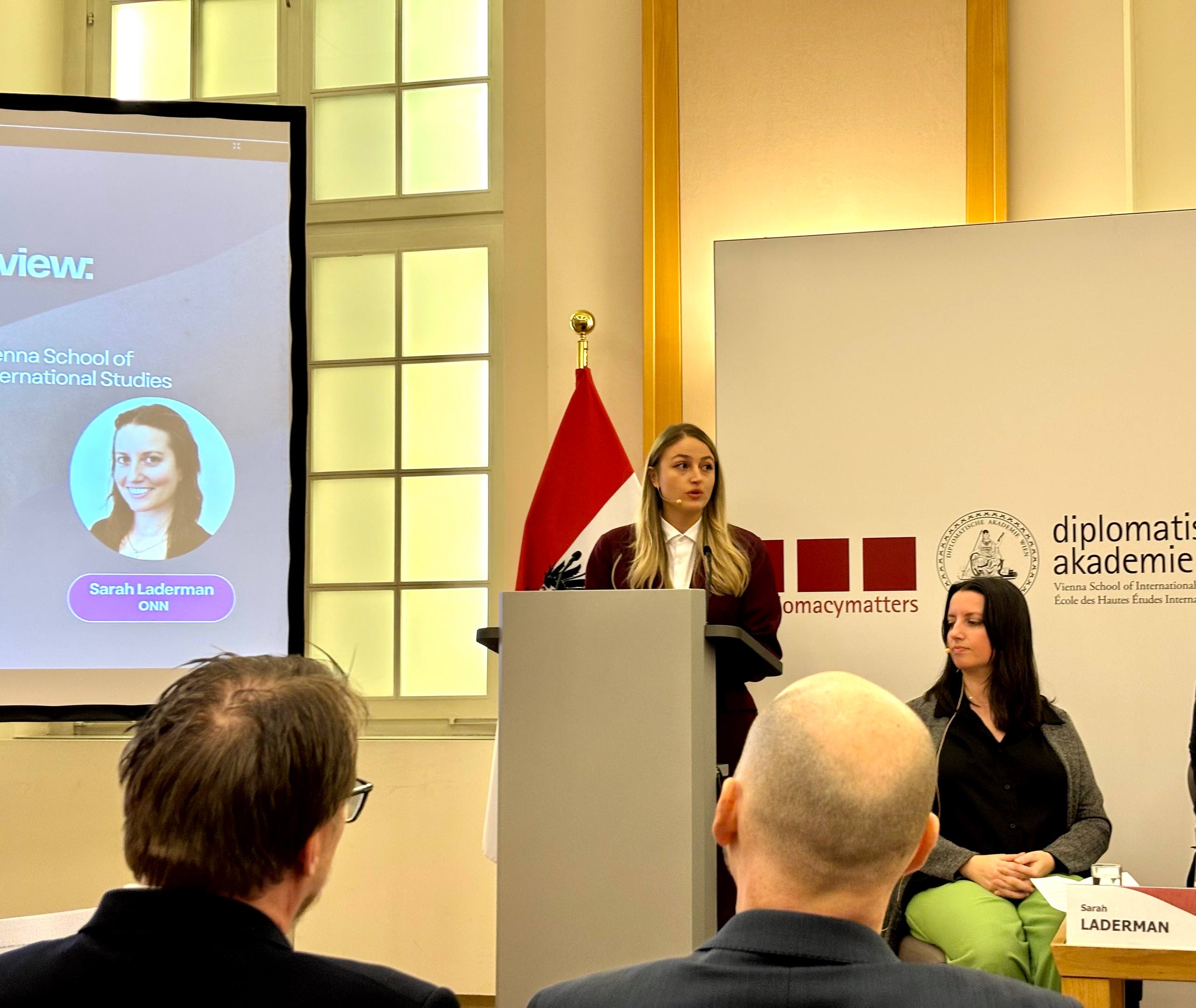
In the opening framing, ONN’s Engagement and Network Coordinator and event moderator Kseniia Pirnavskaia highlighted the stakes:
- In 2026, the NPT and TPNW Review Conferences and the expiration of New START will converge.
- These global milestones will unfold against regional dynamics in Europe, Northeast Asia, South Asia and the Middle East, where nuclear risks may be rising rather than receding.
- The year ahead, she noted, could be remembered either as a period of further escalation and fragmentation or as a moment when states take meaningful steps to rebuild trust, strengthen norms and reduce nuclear risks.
“Dialogue cannot resolve every challenge we face,” she reminded the audience, “but without dialogue, none of these challenges are going to be resolved.”
Opening Perspectives: Multilateralism, Education and Diplomacy
The opening remarks anchored the discussion in three core themes: multilateralism grounded in science, the role of education and institutions, and the importance of parliamentary diplomacy and political will.
Ambassador George-Wilhelm Gallhofer, Director for Disarmament, Non-Proliferation and Export Controls at the Austrian Ministry of Foreign Affairs, emphasised that 2026 may be remembered as a pivotal year in nuclear diplomacy, with stakes “rarely higher.” He argued for multilateralism that is:
- informed by the best available scientific evidence,
- focused on humanitarian harm rather than abstract security concepts, and
- capable of addressing renewed arms racing, eroding trust and AI-driven disinformation.
He pointed to emerging expert mechanisms, from verification groups to scientific advisory panels, as crucial in rebuilding a factual basis for sound nuclear policy.
Ambassador Martin Eichtinger, Director of the Vienna School of International Studies, underlined Austria’s long-standing role in nuclear disarmament and non-proliferation, including its leadership on the TPNW. He connected this tradition to the education of future diplomats, noting that understanding nuclear order, non-proliferation, international organisations and civil society initiatives is now a core part of the Academy’s curriculum.
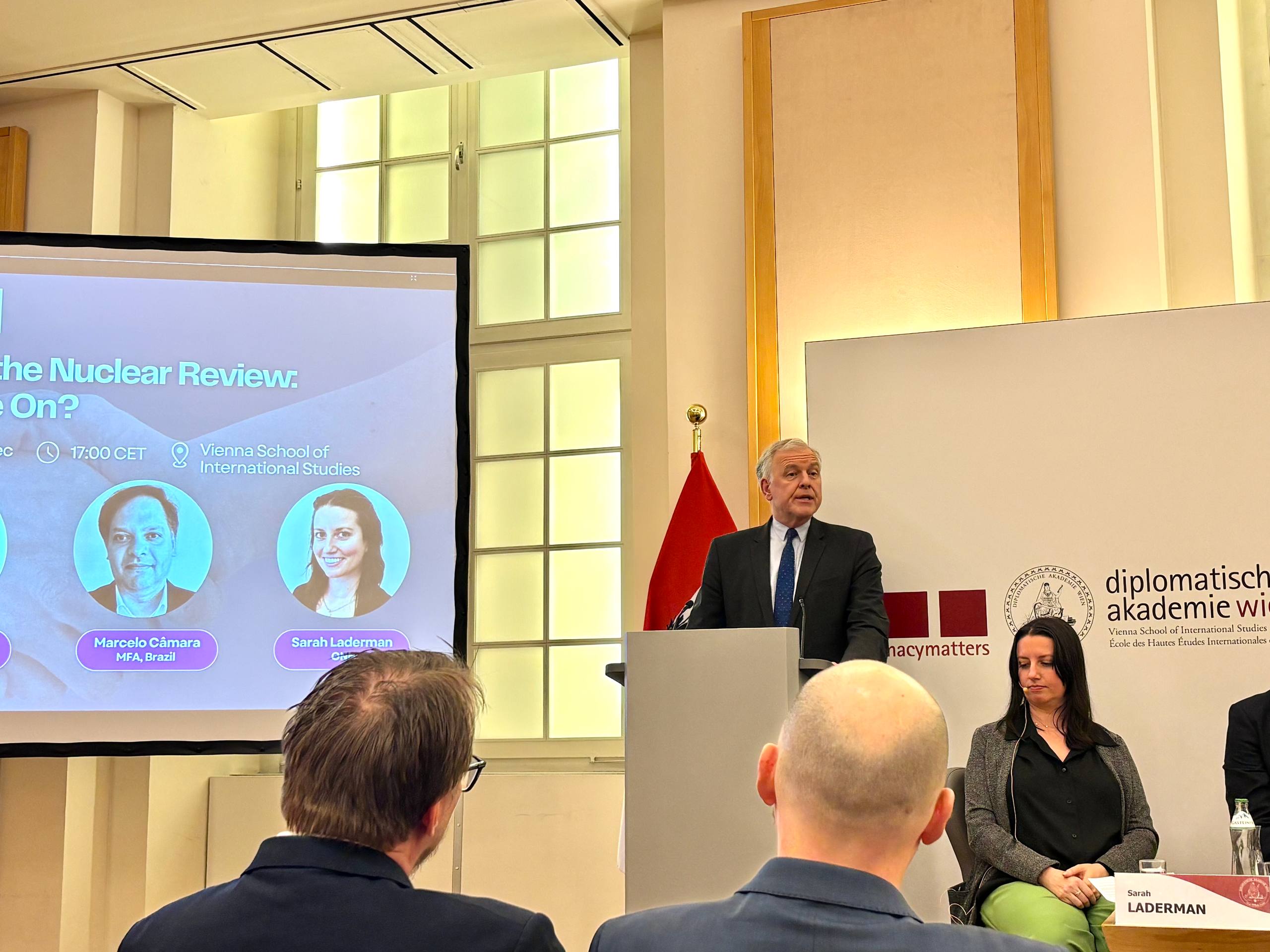
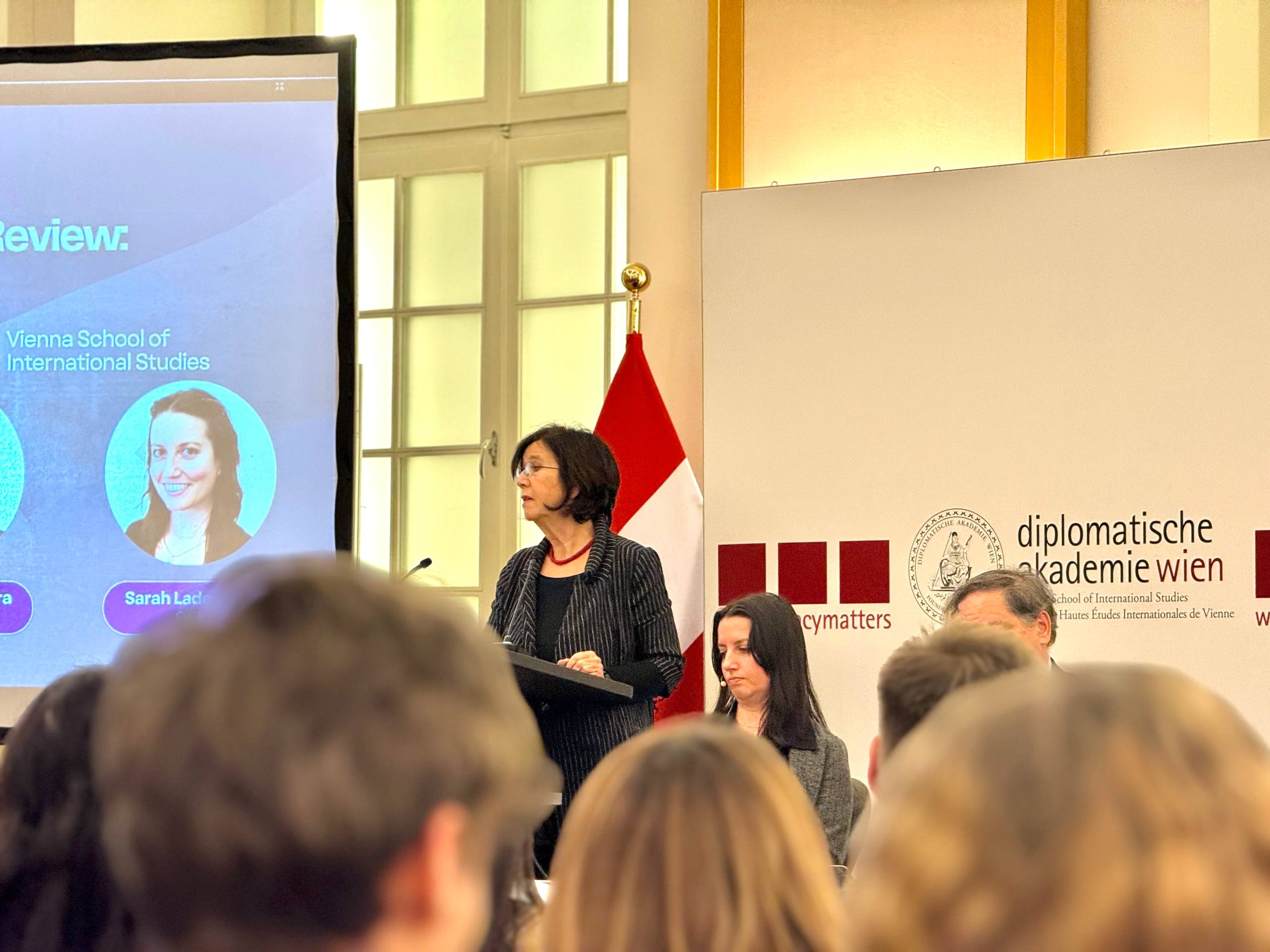
Christine Muttonen, Vice-President of AIES, Co-President of the Parliamentarians for Nuclear Non-Proliferation and Disarmament and Member of the ONN Advisory Council, brought a parliamentary diplomacy perspective. She stressed:
- the long-term humanitarian consequences of nuclear weapons,
- the misleading language of “small” and “tactical” nuclear weapons, and
- the critical role of parliaments and parliamentary assemblies in supporting treaties such as the CTBT and pushing for effective arms control.
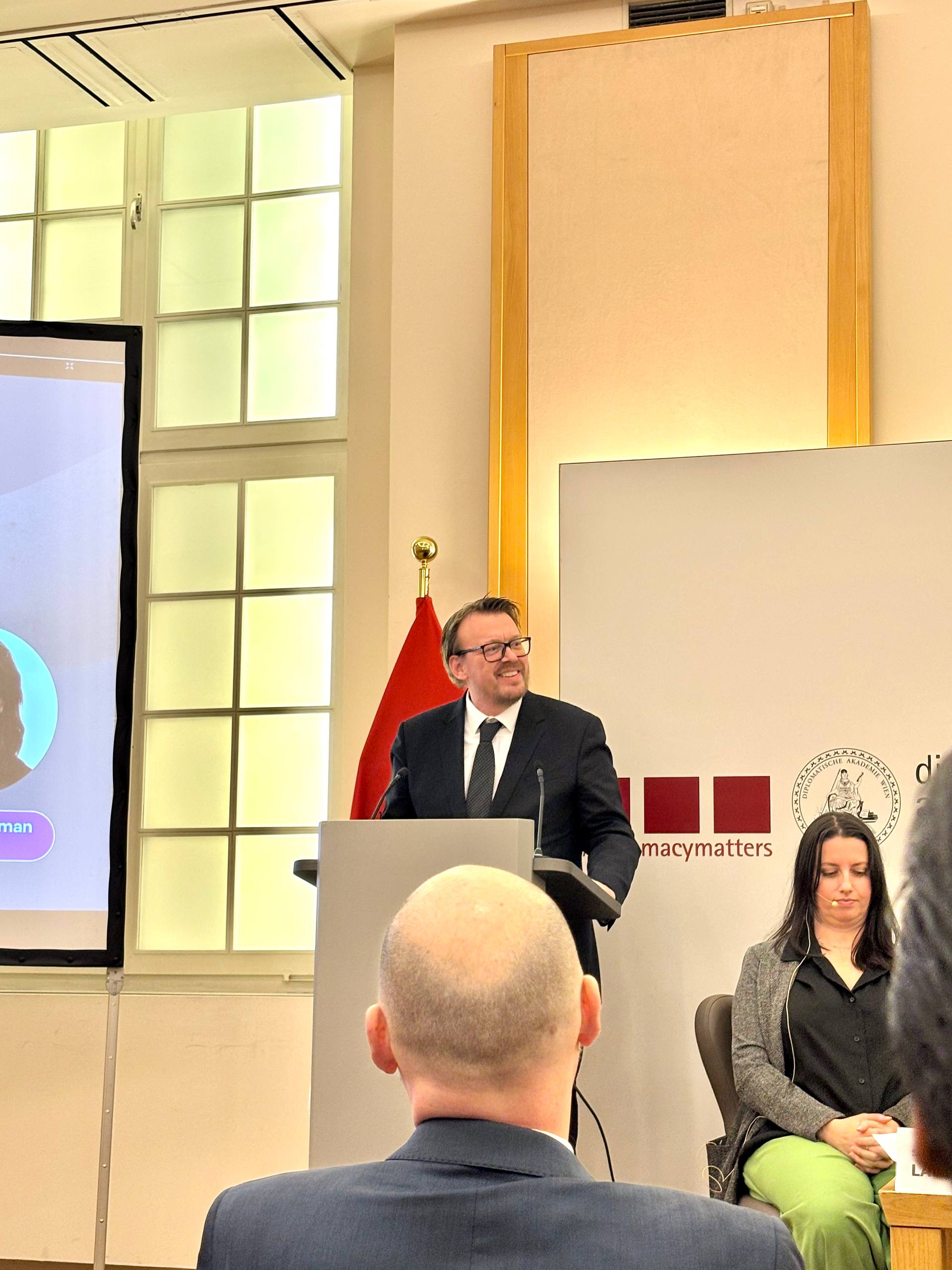
Andreas Persbo, Director of Open Nuclear Network, focused on the treaty architecture itself. He cautioned against treating review conferences as “magical solutions” or “fatal moments of truth,” stressing that:
- The NPT and TPNW together now form a complex of non-proliferation and disarmament law.
- Institutions, safeguards and legal obligations do not switch off when diplomats fail to agree on a single document.
- The fundamental shared interest remains clear: preventing the spread of nuclear weapons and avoiding a world with more nuclear-armed states and more flashpoints.
Panel Discussion: Navigating a Changing Global Order
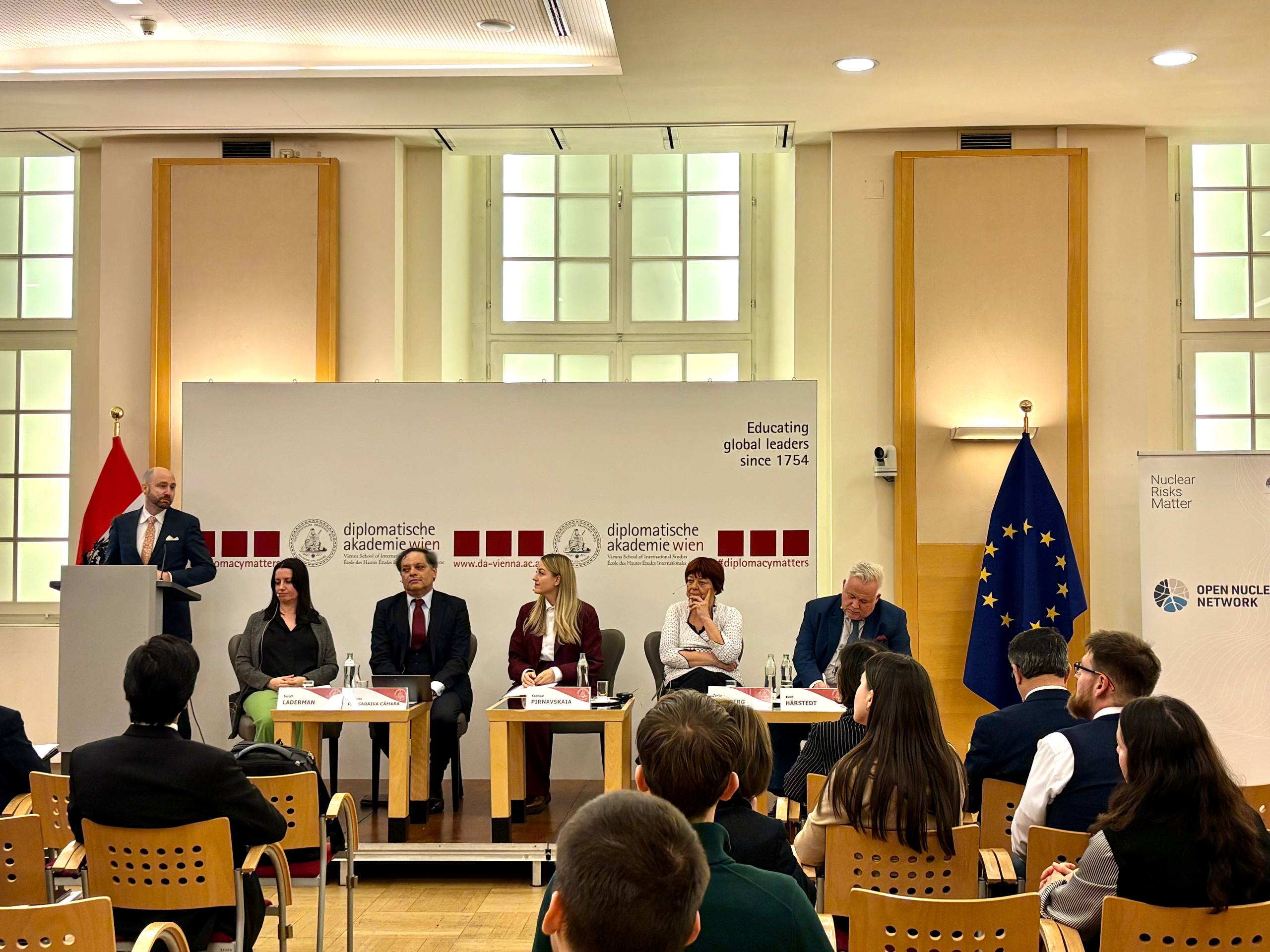
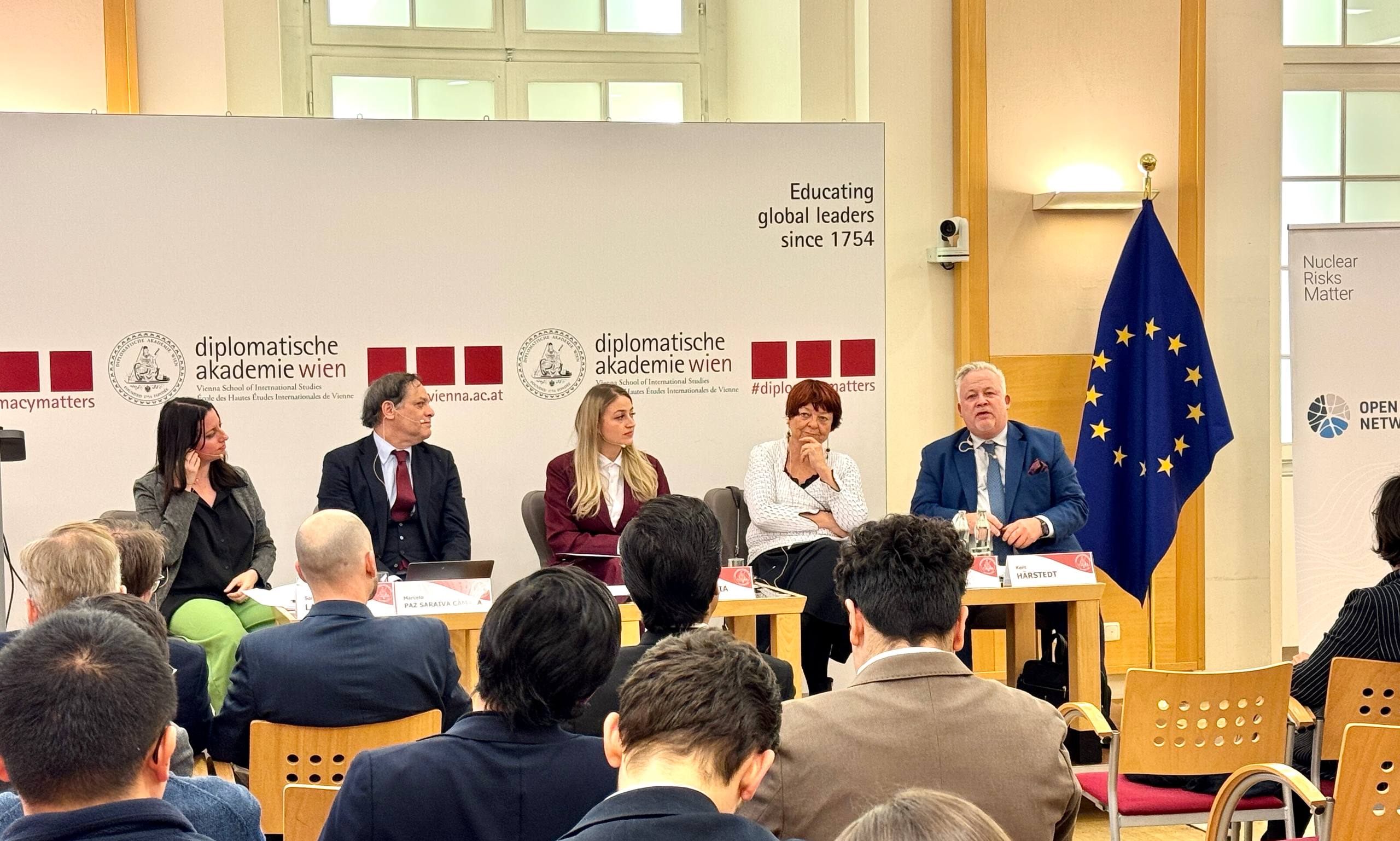
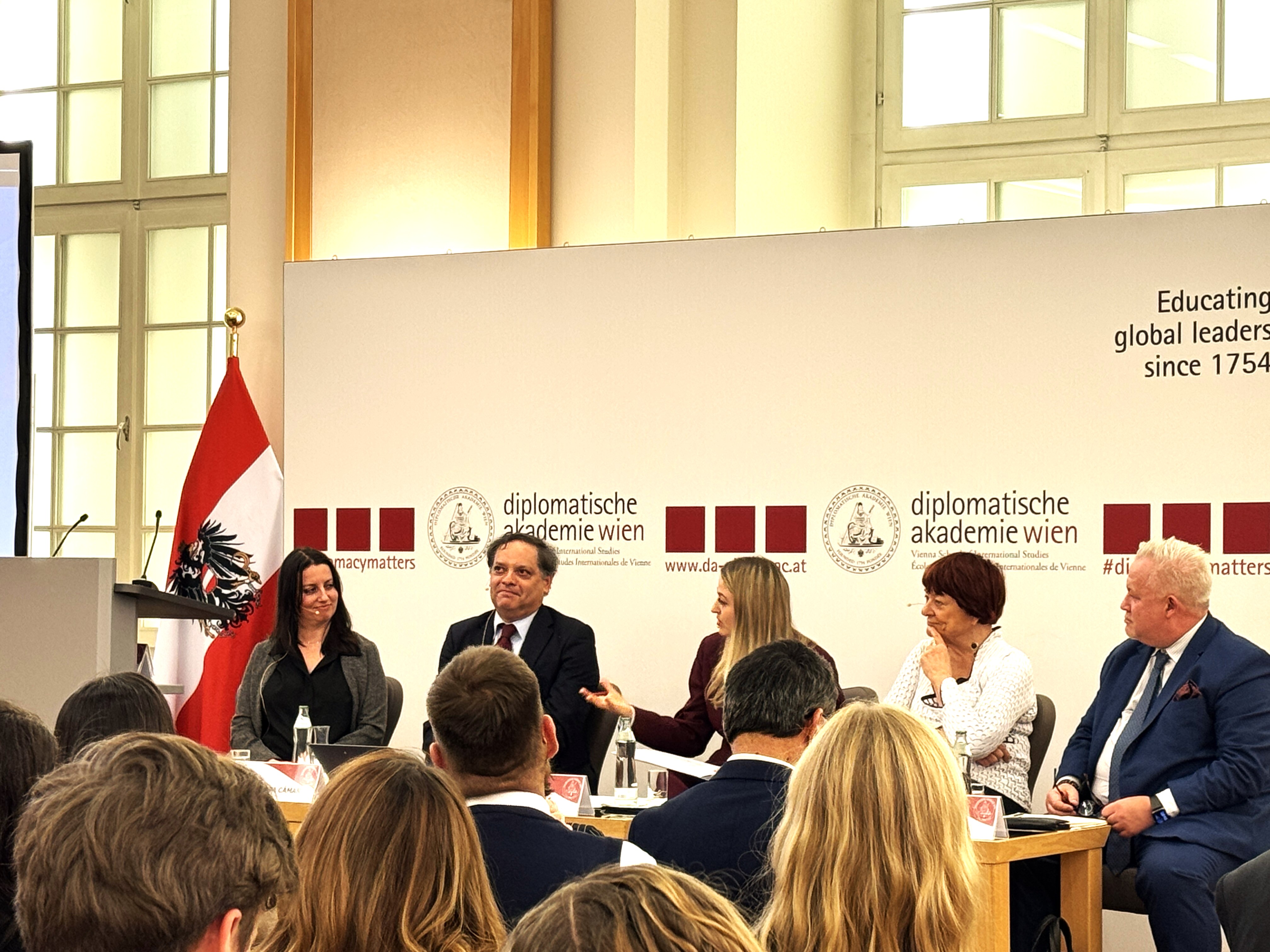
The panel brought together perspectives from diplomacy, politics, technical analysis and regional experience:
- Kent Härstedt, Senior Adviser at CMI – Martti Ahtisaari Peace Foundation and Chair of the ONN Advisory Council
- Tarja Cronberg, Distinguished Associate Fellow at SIPRI and expert on nuclear multilateralism and European security
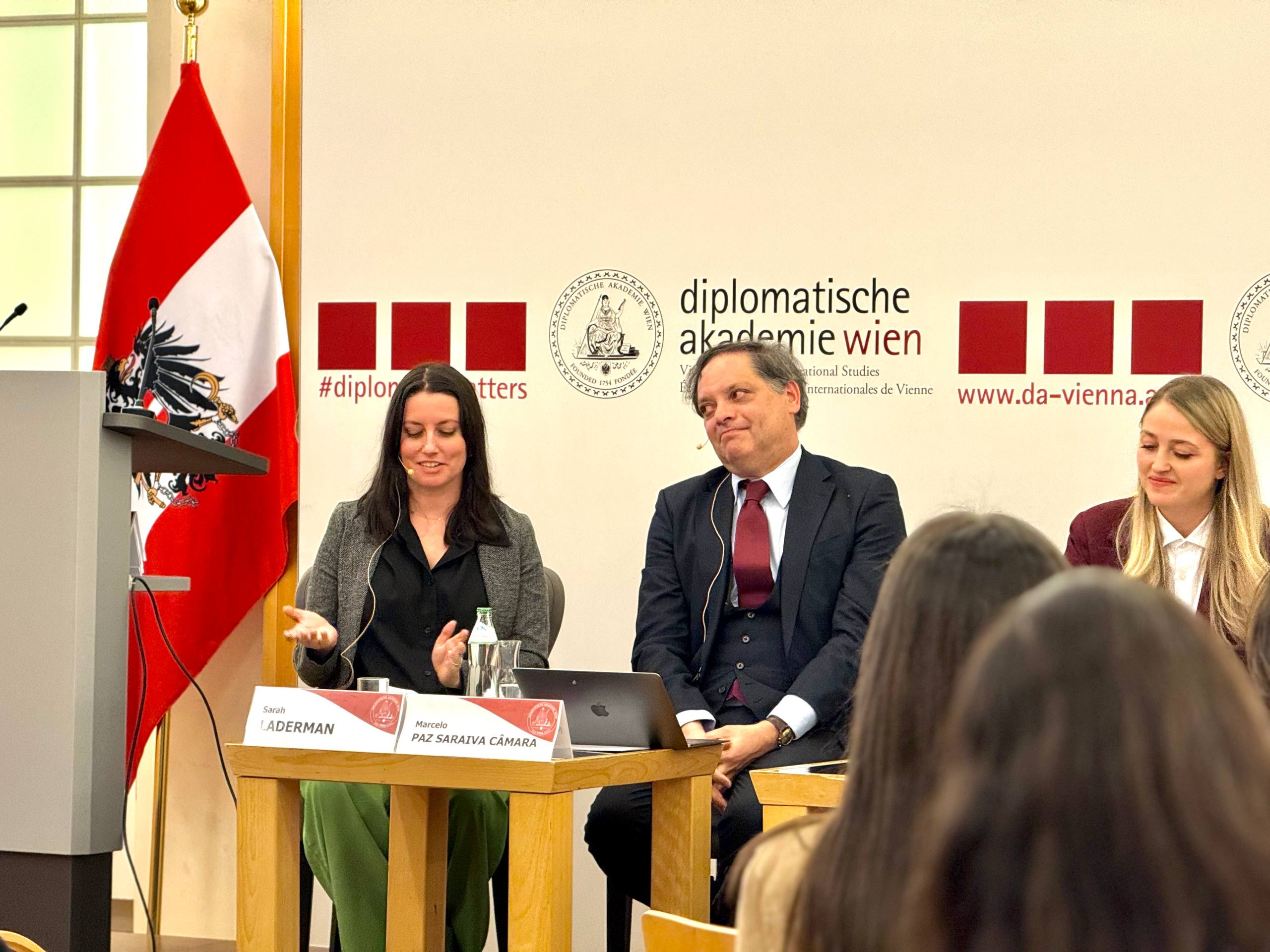
- Marcelo Câmara, Director, Department of Strategic, Defense and Disarmament Affairs, Ministry of Foreign Affairs of Brazil
- Sarah Laderman, Senior Analyst, Open Nuclear Network, a PAX sapiens Programme
1. A More Fragmented International System
Kent Härstedt placed nuclear diplomacy within the broader transformation of the international order. He argued that:
- The rules-based international order of the past three decades has eroded, giving way to renewed great power competition and a more transactional, fragmented landscape.
- Demographic changes, economic shifts and the rise of the Global Majority and Global East are reshaping power relations and creating new friction points.
- The threshold for the use of violence appears lower than in previous decades, increasing the risk that regional conflicts could escalate and intersect with nuclear dynamics.
In this context, he stressed the importance of maintaining channels of communication, including through mediators, facilitators and civil society actors when states are unable—or unwilling—to talk directly.
2. Multipolarity and the Nuclear Dimension
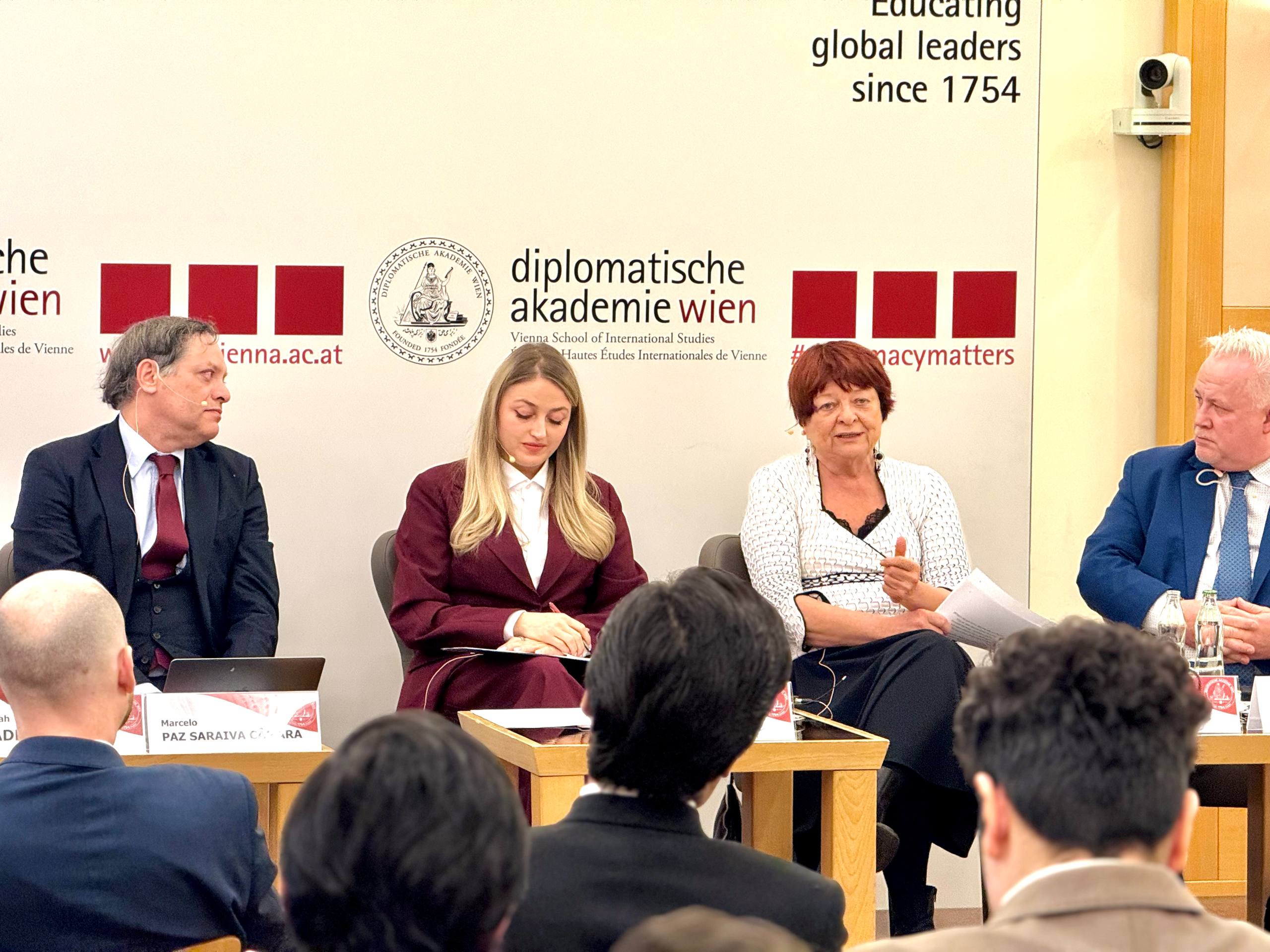
Tarja Cronberg focused on how a multipolar world changes the nuclear equation:
- The current nuclear order concentrates power in the hands of the five NPT-recognised nuclear-weapon states, who also hold permanent seats and veto power in the UN Security Council.
- The original “balance” envisioned in 1960s NPT discussions—between the responsibilities of nuclear and non-nuclear states—has eroded, particularly as nuclear-weapon states fail to meet their disarmament obligations.
- The rise of multipolarity and regional “poles” raises complex questions: How many poles? Which ones? And must all centres of power be nuclear?
Cronberg highlighted the potential of nuclear-weapon-free zones (NWFZs) and regional arrangements as underused sources of stability and confidence-building that deserve greater visibility in global nuclear governance.
3. Credibility of the NPT and Risk Reduction
From Brazil’s perspective, Marcelo Câmara underscored:
- The credibility of the NPT as the cornerstone of the nuclear regime is at stake after successive review conferences have failed to produce consensus outcomes—especially on nuclear disarmament.
- A third failed review in 2026 could significantly damage perceptions of the treaty’s relevance among the Global Majority.
- At the same time, he stressed that the need for nuclear risk reduction is more urgent than ever. The Bulletin of the Atomic Scientists’ decision to set the Doomsday Clock to 89 seconds to midnight was cited as a clear warning of converging risks.
Câmara pointed to technical and scientific work on nuclear disarmament verification as one of the most promising areas for constructive cooperation, including through the newly established UN Group of Scientific and Technical Experts on Nuclear Disarmament Verification. He also drew lessons from Latin America’s experience with the Treaty of Tlatelolco and the Brazil–Argentina bilateral verification mechanism as models of regional confidence-building.
4. Science as a Bridge: Cooperation Amid Rivalry
From a technical and analytical standpoint, Sarah Laderman outlined how science and technology can create space for cooperation—even among rivals:
- Historical examples—from Cold War scientific exchanges and Pugwash conferences to the International Geophysical Year and the Antarctic Treaty—show how technical collaboration can generate trust and concrete policy outcomes.
- Today, large international projects such as ITER or regional facilities like SESAME demonstrate that states with serious political disagreements can still work together on shared scientific goals.
- In the nuclear field, she highlighted nuclear safety and the humanitarian consequences of nuclear use as potential areas for engagement, including in challenging contexts such as the Korean Peninsula.
As Laderman noted, “science could become a bridge for nuclear policy cooperation,” by building human-to-human connections, generating shared evidence, and creating practical pathways for risk reduction when diplomatic channels are strained.
Key Takeaways: What Can We Still Agree On?
Across the opening remarks, panel interventions and audience questions, several points of convergence emerged:
- Nuclear risks are rising, but dialogue remains essential.
Geopolitical tensions, eroding arms control frameworks and new technologies are increasing uncertainty. Yet participants repeatedly stressed that without sustained dialogue—formal and informal—these challenges cannot be resolved. - Even in a fragmented world, common ground exists.
Areas such as risk reduction, transparency, verification, nuclear-weapon-free zones and technical cooperation still offer realistic opportunities for progress and shared interests. - Science could become a bridge for nuclear policy cooperation.
Scientific evidence on the humanitarian and environmental consequences of nuclear war, nuclear safety concerns and verification technologies can help re-centre debates and open channels of cooperation among states that disagree on broader political questions. - Small steps today can meaningfully shape global norms tomorrow.
Participants cautioned against “all-or-nothing” thinking: incremental measures, even when modest, can help restore trust, clarify expectations and gradually strengthen the nuclear governance architecture.
As we head toward 2026, the choices we make—and the conversations we choose to have—will matter. This dialogue was one contribution to that ongoing work; many more will be needed.
2026 – The Year of the Nuclear Review: What Can We Agree On?
